- Roko's Basilisk
- Posts
- AI Meets The Physical World
AI Meets The Physical World
Plus: Robinhood preps new IPO, Palantir goes lifestyle, Grok roasts Elon.

Roko's Basilisk
May 13, 2026

Here’s what’s on our plate:
🧪 Can infrastructure keep up with AI's ambitions?
📰 Robinhood's AI-fueled IPO, Palantir's coat, and Grok turns on its maker.
🧠 Brain Snack: Lock in compute now, the next bottleneck isn't code.
🗳️ Poll: Where does the AI buildout hit the wall first?
Let’s dive in. No floaties needed…

In partnership with

Blu Dot surpasses 2,000% ROAS with self-serve CTV ads

Home furniture brand Blu Dot blew up on CTV with help from Roku Ads Manager. Here’s how:
After a test campaign reached 211,000 households and achieved 1,010% ROAS, the brand went all in to promote its annual sales event. It removed age and income constraints to expand reach and shifted budget to custom audiences and retargeting, where intent was strongest.
The results speak for themselves. As Blu Dot increased their investment by 10x, ROAS jumped to 2,308% and more page-view conversions surpassed 50,000.
“For CTV campaigns, Roku has been a top performer,” said Claire Folkestad, Paid Media Strategist, Blu Dot. “Comping to our other platforms, we have seen really strong ROAS… and highly efficient CPMs, lower than any other CTV partner we've worked with.”
Using Roku Ads Manager, the campaign moved from a pilot to a permanent performance engine for the brand.
*This is sponsored content
The Laboratory
TL;DR
Money can’t fix physics: The top four hyperscalers plan $725B in 2026 capex, yet only 5 of 12 GW in expected new U.S. data center capacity is under construction, and power shortages could constrain 40% of global AI capacity by 2027.
The grid is years behind: Transformer lead times have doubled to 36–48 months, and 2,300 GW of projects sit in interconnection queues, pushing a third of planned centers toward on-site gas generation.
Labor and communities push back: Construction is short 439k skilled workers, apprenticeships take 5–7 years, and local opposition over water and noise is stalling projects.
The real ceiling: If infrastructure keeps pace, AI becomes the century’s defining platform. If not, the industry discovers its limits were never computational but physical, environmental, and human.
Can infrastructure keep up with AI’s ambitions?
Over the past few years, artificial intelligence has reshaped nearly every conversation about technology, from how software is built and businesses operate to how investors value the future and how humans are expected to interact with machines in the decades ahead. The industry’s promises have often been framed in abstract terms: intelligence, automation, productivity, and digital transformation. Yet beneath that vision sits something far more physical and materially constrained.
Every artificial intelligence model that summarizes a document, generates an image, or writes a line of code ultimately runs on machines housed in sprawling data centers that consume enormous amounts of electricity from real-world power grids. The global data center network, now spread across roughly 11k facilities in 174 countries, according to Synergy Research Group, has become the industrial backbone of the AI economy. And companies racing to dominate this new era are spending at a historic scale, committing hundreds of billions of dollars to expanding computing capacity, securing semiconductors, and building the infrastructure they believe will be required to sustain AI demand over the next decade.
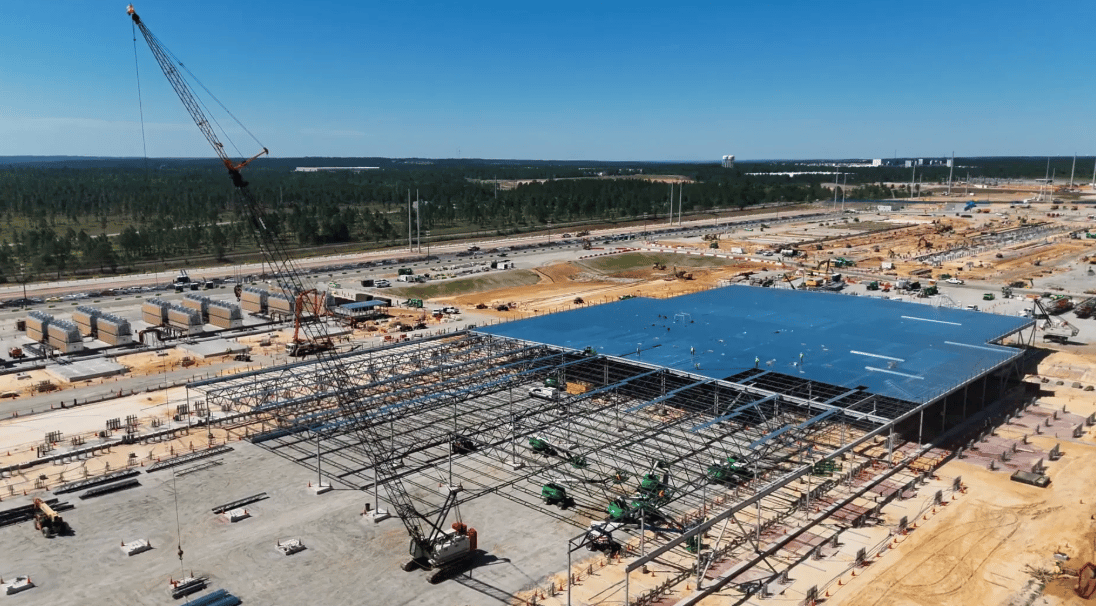
However, as demand continues to expand, the AI industry faces the question of whether the physical world can keep pace. The race now is against the physical reality where power generation, transmission infrastructure, construction timelines, cooling systems, land availability, and semiconductor supply chains are all emerging as potential bottlenecks.
A gap between plans & concrete
As of 2026, the United States is home to 4,184 data centers, more than the next 10 countries combined. Of these, according to the Synergy Research Group, 1,297 are operational hyperscale data centers, nearly triple the number from 2018.
To overcome the challenges presented by the physical world, companies driving the AI infrastructure race are now spending at a scale rarely seen outside wartime industrial expansion or telecom booms.
The four largest hyperscalers, Amazon, Microsoft, Alphabet, and Meta, plan to spend a combined $725B on capital expenditure in 2026, up 77% from last year’s $410B, according to the Financial Times. Wall Street analysts at Evercore and Bank of America now project combined capex exceeding $1T in 2027.
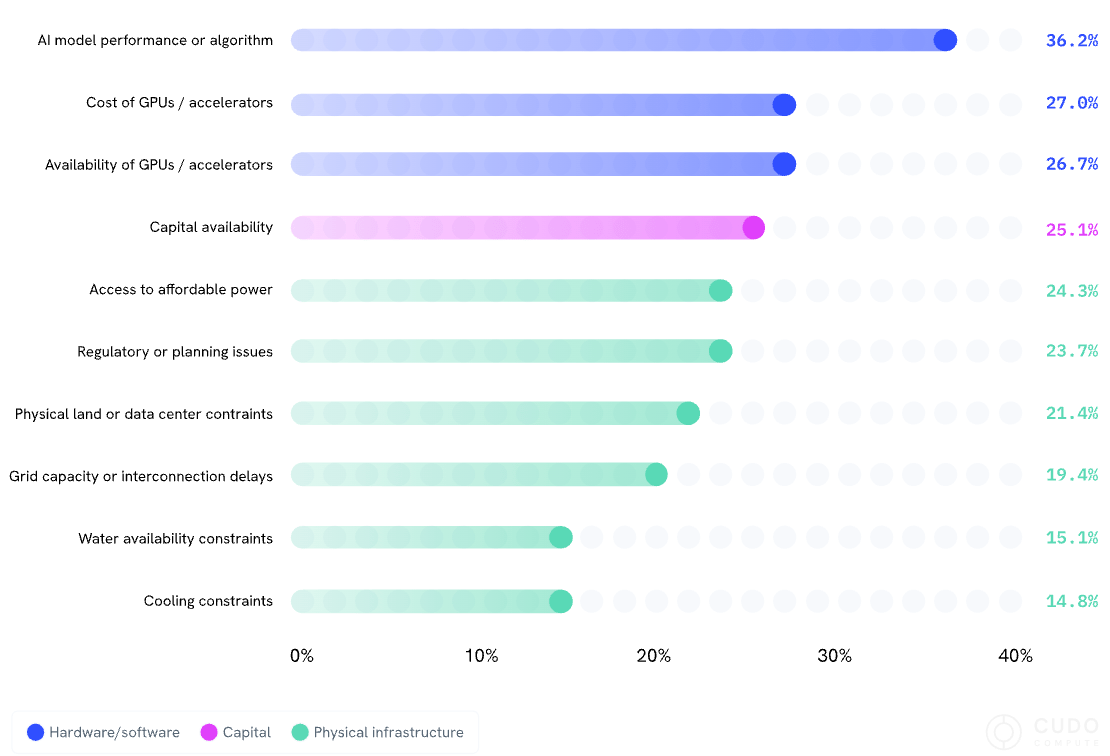
Yet the financial strain underneath that expansion is becoming increasingly visible. CNBC reported that Morgan Stanley analysts expect Amazon to post negative free cash flow of nearly $17B in 2026, while Pivotal Research estimates Alphabet’s free cash flow could fall almost 90% this year, from $73.3B to roughly $8.2B.
Beyond the financial constraints, there are physical limitations on how much can be built and how quickly it can come online. The limitations are reflected in the widening gap between announced capacity and the capacity actually being built.
Of the roughly 12 gigawatts (GW) of new data center capacity expected to come online in the U.S. this year, only about 5 GW is currently under construction, according to Sightline Climate data reported by Bloomberg.
The problem for the industry, then, is not a shortage of capital or ambition, but whether enough power, land, chips, construction labor, and grid infrastructure can be deployed quickly enough to turn projected capacity into functioning reality.
The grid won’t cooperate
Money, however, is only part of the equation. The more immediate constraint facing the AI infrastructure boom is not financing, but electricity itself. Every new hyperscale data center requires enormous, uninterrupted power, and the systems needed to deliver it are already under strain. Lead times for high-voltage transformers, one of the most critical components in grid expansion, have reportedly stretched from roughly 12 to 18 months before 2020 to 36 to 48 months today, according to Sightline Climate data.
At the same time, nearly 2,300 GW of generation and storage projects are now stuck in U.S. interconnection queues awaiting approval, a figure larger than the country’s entire installed power capacity, according to research from Lawrence Berkeley National Laboratory.
This has led to projections that by 2027, power shortages could constrain up to 40% of AI data center capacity globally.
To make up for this energy shortfall, the technology industry is looking to nuclear power plants. However, no commercial SMR is currently operational in the United States, according to the U.S. Energy Information Administration, and most deployment timelines extend years into the future.
In practice, that means many companies can no longer wait for the public grid to catch up. Nearly one-third of planned new AI data center capacity is now expected to bypass traditional grid infrastructure entirely by relying on dedicated on-site natural gas generation.
The shift underscores a broader reality shaping the AI economy: the next phase of artificial intelligence is increasingly becoming an energy story as much as a software story.
The human bottleneck
Even in places where financing, land, permits, and power availability align, another constraint increasingly stands in the way: labor. The U.S. construction industry is already facing a shortage of roughly 439k workers, heavily concentrated in the skilled trades required for large-scale data center projects, according to the Information Technology and Innovation Foundation.
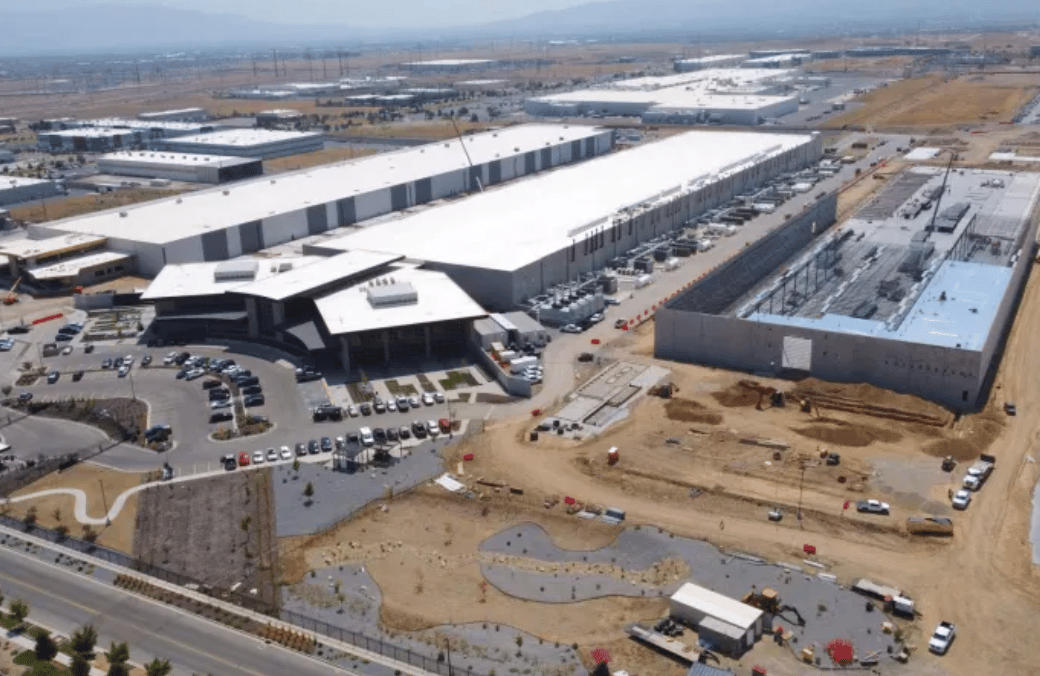
This problem, like the others, cannot be solved in a hurry, since apprenticeship programs for electricians, welders, pipefitters, and other specialized trades often take 5 to 7 years to produce fully qualified workers. Immigration enforcement has further complicated labor availability, with 28% of construction firms reporting workforce disruptions tied to ICE activity within the past six months.
Who pays the cost?
The environmental and social costs of the AI infrastructure boom are also beginning to concentrate in specific regions. Data centers in Northern Virginia consumed nearly 2B gallons of water in 2023, a 63% increase from 2019, according to the Environmental and Energy Study Institute.
At the same time, a peer-reviewed study published in the journal Joule estimated that AI systems could produce between 32.6M and 79.7M metric tons of carbon dioxide emissions in 2025 alone, placing their footprint on par with that of a mid-sized country.
These are limitations that money and technological advancements cannot solve on their own. They require a concerted effort from the administration, civil society groups, and environmental groups working in tandem to develop viable solutions. However, with no consensus on what the future of AI might look like, it seems like a far-fetched dream.
And as the physical footprint of AI expands, local resistance is growing alongside it. Community opposition, once treated as a secondary issue, has increasingly become a material factor in project approvals and construction timelines. Several proposed data center developments have already faced delays or cancellations following protests over water consumption, backup generator noise, land-use concerns, and pressure on local electricity infrastructure.
The limits of the physical world
What makes the current AI boom unusual is that the industry is attempting to scale software at a pace the physical world has never seen. AI models can improve in months, and venture capital can appear in weeks, forcing market valuations to rise in days. But electrical grids take decades to upgrade, and nuclear reactors take years to approve and build. Transmission infrastructure moves through political and regulatory systems that rarely operate with urgency, and skilled electricians, welders, and engineers cannot be produced on demand.
That mismatch increasingly sits at the center of the AI economy. The unanswered question, then, goes beyond whether artificial intelligence will continue advancing, and to whether the surrounding infrastructure can scale at the same pace as the ambition driving it.
If the buildout succeeds, AI could become the defining industrial platform of the century. If it does not, the industry may discover that the limits shaping the future of artificial intelligence are not computational at all, but physical, environmental, and human.

Quick Bits, No Fluff
Robinhood's AI-fueled IPO play: Robinhood is prepping a second retail-focused venture IPO as AI hype drives retail investor appetite back toward speculative bets.
Palantir's chore coat moment: Palantir is leaning into culture-war aesthetics with branded chore-coat merch, blurring the line between defense contractor and lifestyle brand.
Grok turns on its maker: Musk's own AI chatbot Grok has been publicly criticizing him and praising socialist ideas, an embarrassing demonstration of how hard it is to control AI's politics.
Hire smarter with Athyna, save up to 70% on salary costs.
Athyna connects you with top LATAM AI talent, fast
Meet vetted professionals in as little as five days, without long, expensive recruiting cycles.
Save up to 70% on salary costs when hiring AI engineers, product leaders, and data scientists.
Get AI-assisted matching and human vetting so your shortlist is tight, and your interviews are worth it.
*This is sponsored content
Brain Snack For Builders
 | If your AI roadmap assumes unlimited on-demand compute, you’re planning against the wrong constraint. Lock in capacity contracts early, design for efficiency now, and assume the next bottleneck won’t be code; it will be a transformer waiting four years to ship. |
Wednesday Poll
🗳️ AI's biggest constraint isn't models or money, it's the physical world. Where does the buildout hit the wall first? |
Meme Of The Day
The Toolkit
Dust: No-code platform for building custom AI agents that connect to your company's tools and data, so teams can automate workflows without engineering.
Krea: Real-time AI image and video generator with a creative-first interface, great for designers who want to actually steer the output instead of fighting prompts.
Lavender: AI sales email coach that scores your drafts in real time and suggests rewrites to lift reply rates.
Rate This Edition
What did you think of today's email? |
