- Roko's Basilisk
- Posts
- The New AI Choke Points
The New AI Choke Points
Plus: OpenAI’s adult plan, NVIDIA’s agent security, and teens sue Grok.

Roko's Basilisk
March 18, 2026
Here’s what’s on our plate today:
🧪 How the Middle East conflict is redrawing the AI infrastructure map.
⚡ OpenAI adult mode, NVIDIA’s secure OpenClaw, and Grok teen lawsuit.
🧠 Roko’s Brain Snack on stress-testing energy, cables, and choke points.
📊 Poll: What matters most now when placing AI infrastructure?
Let’s dive in. No floaties needed…

🌱 Framer for Startups

First impressions matter.
Launch a stunning, production-ready site in hours with Framer, no dev team required.
Early-stage startups get one year of Framer Pro free, a $360 value.
No code, no delays. Scale from MVP to full product with CMS, analytics, and AI localization.
*This is sponsored content
The Laboratory
Why conflict in the Middle East is threatening the global AI buildout
TL;DR
The Gulf was AI’s next frontier: Saudi Arabia, the UAE, and Qatar attracted over $300B in commitments from Microsoft, Amazon, Google, and Oracle to build data centers and AI hubs, banking on cheap energy and sovereign capital.
War changed the math overnight: The US-Israel conflict with Iran has led to drone strikes on Amazon data centers in the UAE, NVIDIA closing its Dubai office, and the effective closure of the Red Sea and Strait of Hormuz to commercial traffic.
Submarine cables are the real vulnerability: 17 cables run through the Red Sea carrying most digital traffic between Asia, Europe, and the Middle East. Four were already cut during Houthi attacks in 2024.
Energy prices compound the damage: Oil above $100 a barrel raises natural gas costs, which in turn raise electricity costs for data centers, which in turn raise the cost of training and running AI models.
The buildout gets rerouted, not stopped: The industry will diversify toward regions with stable governance, protected connectivity, and on-site power generation (including small modular reactors).

An overview of human history would show that the relationship between war and technology stands out for its mutual influence. Technology influences how wars are fought, and wars often influence how technology evolves.
In the first half of the 20th century, this influence was on full display when, during the Second World War, military needs dictated technological development, and again during the Cold War, when both the Soviet Union and the U.S.A. invested heavily in technology to ensure their military superiority. Even today, this relationship stands intact, albeit with a twist. Today, militaries not only use technology but also invest in protecting infrastructure that ensures technological superiority.
AI goes to war
The year 2026 opened with the U.S. deploying AI to achieve military goals in South America, deploying an AI model developed by Anthropic during its operation to kidnap Nicolás Maduro from Venezuela. The operation demonstrated how AI could influence battlefield decisions.
Following the success, the deployed AI models were used to identify and destroy targets in Iran. However, unlike in South America, the conflict in the Middle East is shaping not just how AI is deployed, but also how regional conflicts can jeopardize the global buildout of AI infrastructure.
For the past few years, the Gulf states, Saudi Arabia, the UAE, and Qatar, have been the hottest real estate on the global AI map. Now, they are inadvertently becoming part of a regional conflict that affects AI companies such as Microsoft, Amazon, Google, and Oracle. These companies have committed more than $300B to build data centers, AI hubs, and cloud regions across the region, and the U.S.-Israel conflict with Iran is threatening to derail their timeline.
The Gulf’s $300B bet
Saudi Arabia’s sovereign wealth fund was among the first to launch a $100B initiative called Project Transcendence to turn the kingdom into a computing superpower. Similarly, the UAE built the framework for what it called a Stargate hyperscale computing center, projected to become the largest such facility outside the United States. For the Gulf nations, the logic was clear and compelling: they need cheap energy, their governments want to diversify away from oil extraction, and they have the capital to fund infrastructure on a scale no private company could manage alone.
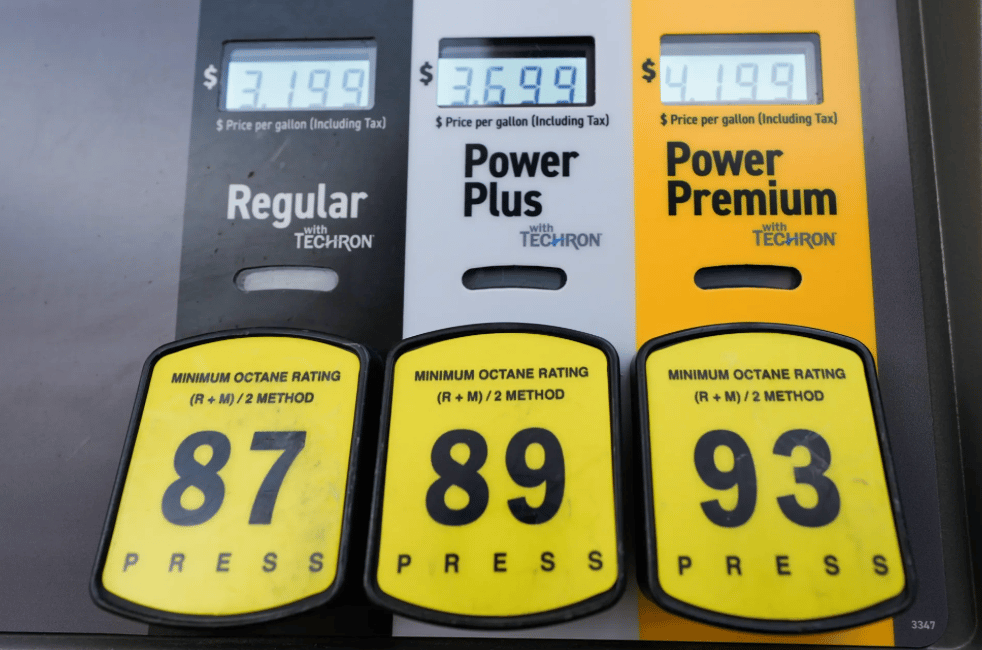
Rising oil prices following the Middle East conflict are forcing the AI industry to reconsider the economics of training and running energy-intensive models. Photo Credit: AP.
However, what these investments did not account for was the political volatility that could undermine the Middle East and the U.S.’s AI ambitions.
Caught in the fire
The U.S.-Israeli air war against Iran has set off military strikes across the Gulf with drones striking two Amazon data centers in the UAE, and a nearby blast damaging a third facility in Bahrain. The conflict has forced NVIDIA to close its Dubai office, and Google employees were stranded there after a sales conference when air travel collapsed. Amazon was forced to quietly advise its cloud customers to consider moving their workloads to a different region. While they may be temporary disruptions, these incidents hint at bigger problems that could derail business prospects.
The biggest challenge facing AI companies is the threat to the flow of information in and out of data centers in the Middle East.
Think of the internet as a vast plumbing system through which data travels via physical cables laid on the ocean floor. Seventeen submarine cables run through the Red Sea alone, carrying most of the digital traffic connecting Asia, Europe, and the Middle East. In 2024, four of those cables were cut during Houthi (a Yemen-based militant group) attacks, disrupting roughly a quarter of global internet traffic between continents.
Now in 2026, both the Red Sea and the Strait of Hormuz are effectively closed to commercial traffic, and, according to Bloomberg’s analysis of the conflict, this chokepoint threatens to isolate the Gulf’s digital infrastructure from the rest of the world, with no alternatives.
For data centers, this means they can continue to exist physically but cannot reliably communicate with the rest of the internet. To better understand the scope of the issue, one needs to recognize that the cloud is only as useful as its connections, and if those connections are severed, all that remains are very expensive, very quiet rooms full of servers.
For companies that spend billions to run and maintain these data centers, the consequences of a targeted attack or a stray missile can be catastrophic. And even if data centers continue to operate without disruption, companies still have to contend with rising operating costs as energy prices keep soaring.
The cost of rising energy prices
Since the start of the conflict in the Middle East, the price of crude oil has risen to more than $100 per barrel for the first time in years. For most people, this means paying more for petrol and diesel. Still, for the AI industry, this means a rethink of their business strategy to make sense of the economics of training and deploying the power-hungry technology.
According to CSIS data, AI infrastructure already accounted for 4.4% of U.S. annual energy consumption in 2023, a figure projected to triple by 2028. To accommodate this rapid rise in energy demand, the AI industry was looking to the Middle East to temper costs.
However, as oil prices spike, they also push up natural gas prices, which power much of data center electricity generation, raising their operating costs. Then there is the impact of rising fuel prices on the overall global economy. As fuel prices rise, inflation follows, forcing central banks to keep interest rates high. Higher interest rates raise the cost of borrowing, which, in turn, increases the cost of building new AI infrastructure. In short, rising energy prices not only raise operational costs but also push up the costs of future buildouts.
It is important to understand that the investment thesis for AI infrastructure was built on a particular set of financial conditions: cheap energy, manageable borrowing costs, and stable supply chains. Now, the conflict in the Middle East is attacking all three at once.
For companies, the conflict is not only unearthing the complex realities of geopolitics but also forcing them to rethink how they want to position themselves to insulate against future disruptions.
The current conflict did not arrive in a vacuum for the AI industry; it arrived on top of a supply chain already under significant stress. As Bloomberg documented, the conflict is unfolding against a backdrop in which computing capacity, not political will, is already the binding constraint on AI development. The primary bottleneck in early 2026 had already shifted from chip availability to power grid capacity. There is simply not enough electricity in the right places to run the scale of AI infrastructure being planned.
To address this, an AI buildout was planned outside the United States, which is now at risk. According to The Information, the AI buildout relied on the Gulf’s abundant energy to overcome grid constraints, and delays in implementing the strategy could affect AI projects worldwide that were counting on that capacity within the next few years.
Rerouting the AI map
The conflict in the Middle East is unlikely to stop AI development as a whole. However, its impact is expected to be felt most in where AI infrastructure is built and on what terms.
Bloomberg’s assessment identified the Hormuz disruption as a structural signal, not a temporary one, that should accelerate geographic diversification of compute infrastructure toward regions with stable governance and protected connectivity. The case for on-site energy generation, including small modular reactors, is now being made on security grounds rather than environmental ones. If data centers can generate their own power, they will be insulated from grid attacks and energy price shocks.
The logic rests on the shift that, just as the economics of steel and oil shaped much of the conflicts of the 20th century, the realities of computing and the minerals that feed it will shape the geopolitics of the 21st century.
The Gulf may still become a major AI hub with the backing of sovereign capital, which is patient in ways that private equity is not. But the easy assumption that the cloud was above geopolitics has been permanently retired.
AI infrastructure is physical; it bleeds, and the investors who built models that forgot this are now doing urgent math on the gap between what they promised and what a war just made uncertain.
The conflict in the Middle East, then, is as much an opportunity for the industry to cover its blind spot as it is a disruption to the current economics of AI development.

Quick Bits, No Fluff
OpenAI’s adult mode: OpenAI is still pushing toward an ‘adult mode’ for verified adults, but internal concerns about emotional dependency, moderation, and misclassified minors are delaying its launch.
NVIDIA secures OpenClaw: The company’s new NemoClaw wraps OpenClaw in enterprise-grade security and privacy controls, trying to make open AI agents less terrifying for real companies.
Grok teens lawsuit: Three Tennessee teens are suing xAI, alleging that Grok generated sexualized images of them as minors and that the product was defective by design.
Outperform the competition.
Business is hard. And sometimes you don’t really have the necessary tools to be great in your job. Well, Open Source CEO is here to change that.
Tools & resources, ranging from playbooks, databases, courses, and more.
Deep dives on famous visionary leaders.
Interviews with entrepreneurs and playbook breakdowns.
Are you ready to see what’s all about?
*This is sponsored content
Brain Snack (for Builders)
 | Do not call any AI stack ‘resilient’ until you’ve mapped its energy source, cable path, cloud region, and geopolitical choke points. If one conflict can freeze it, it is not infrastructure; it is optimism. |
Wednesday Poll
🗳️ What matters most now when choosing where AI infrastructure gets built? |
Meme of the Day
The Toolkit
Mirage: Browser-based 3D design app that lets you prototype interactive product shots and visuals directly in your editor.
Speechmatics: Speech recognition engine for real-time, multilingual transcription and voice analytics across audio and video.
Superhuman: Rebranded Grammarly platform offering an AI assistant that drafts, edits, and manages communication across email and work apps.
Rate This Edition
What did you think of today's email? |
