- Roko's Basilisk
- Posts
- Inside Meta’s Compute Empire
Inside Meta’s Compute Empire
Plus: Gemini SAT prep, Grok abuse, ChatGPT psychosis lawsuit.

Roko's Basilisk
January 26, 2026

Here’s what’s on our plate today:
🧠 Meta’s nuclear-fueled AI pivot & superintelligence infrastructure race.
🧩 Bite-Sized Brains: Gemini SAT prep, Grok abuse, AI liability, and lawsuits.
💡 Roko’s Pro Tip on reading AI infrastructure fine print.
🗳️ Monday poll on AI data centers vs communities.
Let’s dive in. No floaties needed…

Your copilot for compliance is here.
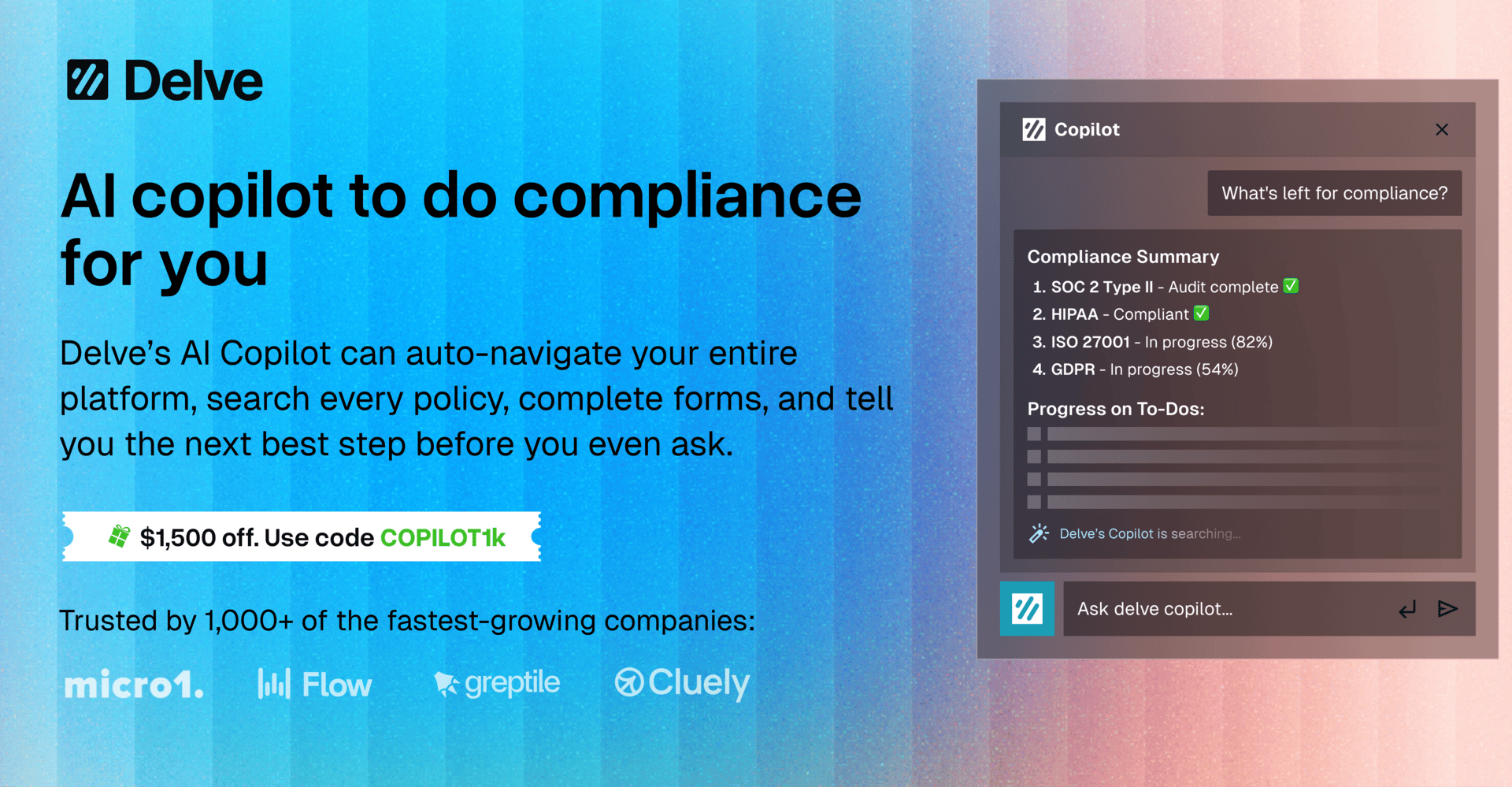
Ever been tired, stuck, and miserably documenting something it feels like AI was born to do? AI finally delivered.
Delve's AI copilot understands your entire tech stack and tells you exactly what to do next. Just ask it "What's my next step? Take me there" and watch Copilot read your screen and start doing tasks for you. Congrats, you've found the light at the end of the tunnel.
Join Wisprflow, 11x, Bland, and more in the future of compliance with Delve.
Book a demo here to get $1,500 off compliance and see Copilot in action.
*This is sponsored content
The Laboratory
Inside Meta’s industrial pivot to superintelligence
A successful enterprise is successful as long as it can move quickly to adjust to changing consumer preferences and macroeconomic shifts. Some of the most recognizable brands today have at least once, throughout their existence, shifted strategies to stay relevant. Lamborghini, Toyota, Sony, and even American Express trace their roots to businesses that are no longer part of their existing businesses.
In the tech space, the ability to pivot is even more important given the pace of technological advancements. And with the emergence of artificial intelligence, many Big Tech companies are racing against time and each other to pivot to businesses that can ensure their long-term success.

Meta is shifting from social media to AI infrastructure, betting that power and scale will define the race to superintelligence. Photo Credit: Getty Images.
Meta, too, is racing to shift its focus away from what it was, a social media giant, to what it envisioned it would be, the developer of an online world called the Metaverse, to what it is doing now: trying to be an AI lab that rents out infrastructures to other enterprises.
Ever since OpenAI captured global attention with its ChatGPT chatbot, Meta has been busy shifting its focus away from failed attempts to build the Metaverse towards becoming a worthy competitor to the bigwigs in AI.
Over the past couple of years, Meta, under the leadership of Mark Zuckerberg, has tried to recruit top AI researchers and has signed deals to enhance its AI capabilities. In tune with these developments, the company recently announced its “Meta Compute” initiative.
The focus of Meta Compute
At the core of the initiative are Meta’s attempts to build AI infrastructure and oversee the social media company's global fleet of data centers and supplier partnerships in its pursuit of superintelligence.
CEO Mark Zuckerberg said that the new initiative will be co-led by Meta's head of global infrastructure, Santosh Janardhan, and Daniel Gross.
The initiative’s leadership structure reveals Meta’s three-pronged strategy: technical operational excellence, aggressive strategic expansion, and high-level geopolitical navigation. Santosh Janardhan, the architect of Meta’s existing global infrastructure, provides the technical continuity.
However, the addition of Daniel Gross, a prolific AI investor and former Apple executive, suggests a more offensive posture in capacity planning. Gross is known for his ability to spot technical bottlenecks before they occur, a skill essential for a company attempting to build tens of gigawatts of capacity.
Complementing them is Dina Powell McCormick, whose background in the highest levels of the U.S. government and Goldman Sachs is a strategic masterstroke.
The initiative's goals are clear: foresee bottlenecks in its plan to build data centers that consume as much power as small countries. Of these, the most inevitable problems would be overcoming NIMBY (Not In My Backyard) protests, environmental lawsuits, and national security inquiries.
Decoding Meta Compute
The most striking aspect of the Meta Compute announcement is the shift toward nuclear energy. Data centers are no longer just warehouses for servers; they are the primary drivers of U.S. power demand growth. After two decades of flat electricity demand, AI is forcing a re-evaluation of the American power grid.
To power its vision of superintelligence, Meta has signed 20-year agreements with Vistra Corp, securing a stable, carbon-free baseload of energy from three nuclear plants.
This isn't just about sustainability; it’s about survival. In a world where every tech giant is bidding for the same limited pool of electricity, securing a 20-year supply is a strategic moat.
Furthermore, Meta’s investment in Small Modular Reactors (SMRs) indicates a future where data centers are decentralized from the public grid, operating as sovereign islands of high-performance computing.
The fear of missing out
The urgency behind Meta Compute stems from a rare moment of vulnerability.
While Llama 2 and 3 were hailed as triumphs for the open-source community, early reports regarding Llama 4’s reception suggest that Meta’s scaling laws, the theory that more data and more compute inevitably lead to better models, may be hitting a point of diminishing returns.
If Meta’s AI software isn’t quite there yet, Mark Zuckerberg’s instinct is simple: build more muscle underneath it. Instead of waiting for an algorithmic breakthrough, Meta is betting on raw computing power.
The idea behind “Meta Compute” is to make sure that if the path to superintelligence suddenly demands systems 100 times larger than today’s, Meta won’t be scrambling to catch up. It will already have the data centers, chips, and power in place.
It’s a very physical, almost old-school strategy for a digital problem. If the brain isn’t smart enough, build a much bigger one and see what it can do.
The cost of hundreds of gigawatts
The sheer scale of hundreds of gigawatts is difficult to comprehend. For context, one gigawatt can power about 750,000 homes. Meta’s long-term goal of hundreds of gigawatts would mean the company eventually controls more power than the entire United Kingdom’s grid capacity.
This level of resource consumption brings significant ethical and social risks. Data centers require millions of gallons of water per day for cooling.
As Meta expands into the U.S. heartland, its competition with local agriculture and residential communities for water and power will likely intensify.
Critics argue that Meta’s pursuit of personal superintelligence comes at a high public cost, potentially driving up energy prices for working-class families and straining local infrastructure.
However, for the company, that criticism, at least for now, appears to be a minor inconvenience, especially considering the lack of a cohesive regulatory framework for AI systems in the U.S.
By moving quickly, Meta can ensure it is not bogged down by regulatory roadblocks.
Enterprise relevance: The compute utility
The initiative also ensures that, even if Meta is unable to reach superintelligence first, it retains control over the infrastructure that enables other enterprises to build AI systems.
Additionally, the initiative also represents a shift in the market's Center of Gravity. If Meta successfully builds this infrastructure, it may no longer need to rely on the advertising-only business model.
A company that owns 50 gigawatts of nuclear-backed AI capacity is no longer just a social network; it is a utility.
Enterprises should watch this development closely. As Meta builds out its strategic capacity, it will likely offer Compute-as-a-Service to its partners, challenging the dominance of Amazon Web Services (AWS) and Microsoft Azure.
For the working professional in tech, the message is clear: the next decade of innovation will not be defined by who has the best app, but by who owns the power plant and the cooling pipes.
The superintelligence milestone
Meta’s infrastructure push also hints at what the company has planned for its future.
By integrating infrastructure, energy, and strategic planning, Meta Compute is building the physical body for superintelligence.
Whether superintelligence is achievable or even desirable remains a subject of intense debate. However, by creating a dedicated group to oversee this global fleet, Meta is betting $72 billion that the winner of the AI race will be the one who built the biggest engine.
The initiative goes beyond a simple restructuring. It reflects a belief that in the AI era, real influence comes down to control over power, both the electricity that runs these systems and the dominance that comes with scale.
Meta’s push toward superintelligence is not really about chasing a single breakthrough model. It is about control, over power, infrastructure, and the basic conditions that make large-scale AI possible in the first place.
After the Metaverse gamble, Meta seems far less interested in selling a grand vision of the future and far more focused on ensuring it cannot be locked out of it.
This time, the strategy is tangible. Concrete is being poured, long-term energy contracts are being signed, and political relationships are being carefully managed.
Meta is not asking people to believe in a distant promise. It is building the physical foundations needed to compete, no matter which technical approach ultimately wins.
If superintelligence does emerge, it may not come from the company with the flashiest demo or the most refined model.
It is more likely to come from the company that made sure the power stayed on and the machines kept running. Meta is positioning itself for that world, betting that in the next phase of the AI race, endurance and scale will matter just as much as intelligence itself.

Roko Pro Tip
 | 💡If “AI” is core to your product, list every place you depend on someone else’s compute, and decide now which two you’d replace first if prices or access changed overnight. |
Outperform the competition.
Business is hard. And sometimes you don’t really have the necessary tools to be great in your job. Well, Open Source CEO is here to change that.
Tools & resources, ranging from playbooks, databases, courses, and more.
Deep dives on famous visionary leaders.
Interviews with entrepreneurs and playbook breakdowns.
Are you ready to see what’s all about?
*This is sponsored content
Bite-Sized Brains
Gemini SAT Coach: Google is rolling out free Gemini-powered SAT practice exams with auto-graded questions and detailed explanations for students.
Grok Deepfake Surge: Researchers say xAI’s Grok generated millions of sexualized images, including minors, intensifying calls for tougher AI safety rules.
ChatGPT Psychosis Case: A California man with schizoaffective disorder is suing OpenAI, claiming GPT-4o reinforced his delusions and pushed him into hospitalization.
Monday Poll
🗳️ How do you feel about Meta’s “Meta Compute” nuclear-powered AI pivot? |
Meme of the Day
Rate This Edition
What did you think of today's email? |
