- Roko's Basilisk
- Posts
- The Fourth Agricultural Revolution
The Fourth Agricultural Revolution
Plus: ChatGPT translation, Google’s AI ads, and Wikipedia’s payday.

Roko's Basilisk
January 19, 2026
Here’s what’s on our plate today:
🌾 How AI is reshaping farming, supply chains, and food security.
📰 AI translation, ad-stuffed answers, and Wikipedia billing giants.
🧠 Roko’s Pro Tip: Start with one field, measure real impact.
📊 Poll: Would you trust AI to run your farm?
Let’s dive in. No floaties needed…

In partnership with

Introducing the first AI-native CRM

Connect your email, and you’ll instantly get a CRM with enriched customer insights and a platform that grows with your business.
With AI at the core, Attio lets you:
Prospect and route leads with research agents
Get real-time insights during customer calls
Build powerful automations for your complex workflows
Join industry leaders like Granola, Taskrabbit, Flatfile and more.
*This is sponsored content
The Laboratory
Inside the fourth agricultural revolution powered by AI
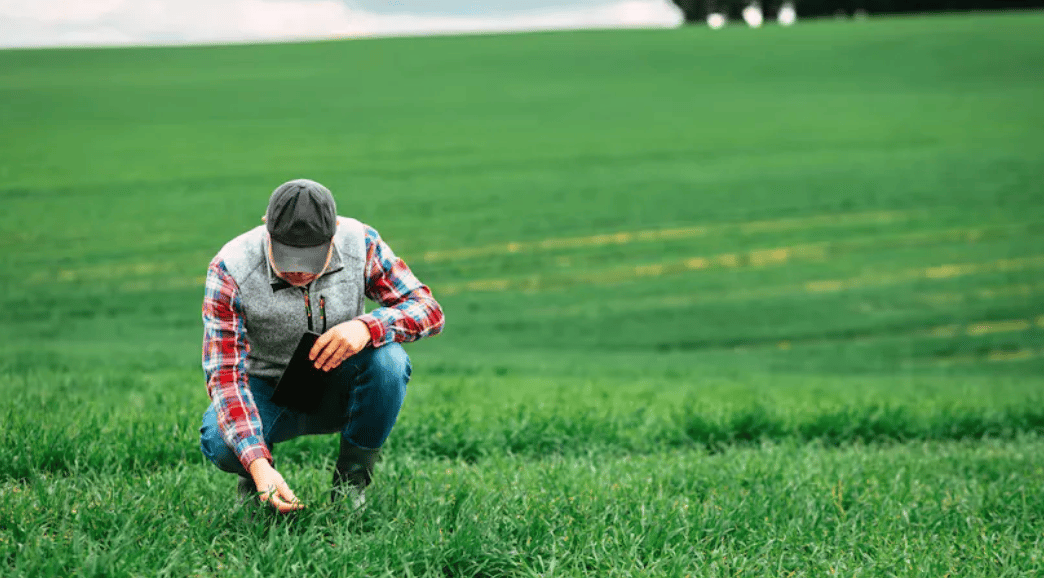
AI is transforming farming into a data-driven, automated industry. Photo Credit: AgTech Navigator.
From using a simple plough to modern farm equipment, agriculture has come a long way. At each step, technology played a crucial role in the development of modern agricultural practices. Today, driving a tractor on farmland can be more complex than learning to fly a small propeller-powered aircraft. All this is because farm equipment today comes equipped with more sensors and features than most vehicles.
This shift in complexity, however, is not restricted to tractors. Modern farming techniques are undergoing significant changes due to the challenges posed by global geopolitics, shifts in climate patterns, and changing consumer preferences. And many around the globe are hoping artificial intelligence will be able to revamp farming techniques and restructure how food is grown, harvested, transported, and sold, creating what many are calling the fourth agricultural revolution.
The field as a data center
The modern farm increasingly resembles a technology operation. Satellites photograph fields daily, providing imagery to machine learning models that detect crop stress invisible to the human eye.
Sensors embedded in soil transmit moisture readings to cloud platforms that calculate precisely when and where to irrigate. Drones equipped with multispectral cameras scout for pest infestations before they spread.
This constellation of technologies falls under ‘precision agriculture’, a term encompassing tools that apply inputs exactly where and when they're needed rather than blanket-treating entire fields. The market for these technologies was valued at approximately $10.5 billion in 2024 and is expected to more than double within a decade.
In this space, AI-powered systems are expected to improve yields while cutting input waste. For farmers operating on thin margins, that efficiency gain can mean the difference between profit and loss.
Spraying less, growing more
Perhaps no application better illustrates AI's agricultural promise than precision spraying. Traditional farming treats entire fields uniformly: every square meter receives the same herbicide application regardless of whether weeds are present. This approach wastes chemicals, increases costs, and raises environmental concerns.
Computer vision systems now identify individual plants and distinguish crops from weeds in real time. John Deere's See & Spray technology claims to have achieved an average 59% reduction in herbicide usage across over one million acres in 2024, allowing farmers to save money that would otherwise have increased the cost of production.
According to the Swiss company Ecorobotix, its plant-by-plant recognition technology can reduce chemical use by up to 95%.
These reductions matter beyond the balance sheet. With approximately one billion pounds of pesticides sprayed annually in the United States alone, precision application could significantly decrease chemical runoff into waterways and residues on food.
Robots enter the orchards
Besides foodgrain, AI is also being deployed in fruit orchards. Agricultural robots are no longer experimental. The market was worth about $7.3 billion in 2024 and is expected to grow rapidly over the next decade, driven in part by labor shortages that leave crops unharvested.
And while companies claim their robots come close to perfection when it comes to picking fruit, researchers say progress is more gradual than revolutionary.
Beyond the fields and orchards, AI is also reshaping what happens after food leaves the field.
AI beyond the farm gate
In warehouses and grocery stores, algorithms are helping companies predict demand more accurately and cut down on waste. One online grocery business reported nearly halving its food waste after using AI to forecast sales, while a regional chain reduced spoilage of fresh items by one-fifth.
These systems look at factors such as weather, local events, promotions, and past buying habits to estimate how much each store will sell. That matters because food waste is a global problem. Around 17% of all food produced each year is never eaten. Better forecasting helps by preventing overproduction in the first place.
Large food companies have moved quickly. Nestlé, for instance, uses a system that pulls in data from hundreds of sources each day to predict demand for individual products, reducing forecasting errors in early trials.
A widening digital divide in agriculture
But the benefits of agricultural AI are not evenly shared. Large, well-funded farms are far better positioned to afford new equipment and software. Small farmers, who grow more than a third of the world’s food on a fraction of its farmland, often face high costs, poor internet access, and limited technical training.
This raises the risk of a divided system, where big farms become more efficient while smaller ones fall further behind. In many developing regions, funding for AI tools is hard to secure, and even basic digital upgrades can be out of reach.
Questions about who owns and controls farm data add another layer of concern, especially if that data could be used to influence prices or access to markets. Consumers, too, are still unsure how to feel.
Trust transparency and the consumer question
Surveys show broad support for using AI to reduce waste and improve harvests, but hesitation remains at the checkout counter. Many people say they are less likely to buy food linked to AI because they worry about safety or simply do not understand what AI actually does in food production.
That gap in understanding matters. AI could help make the food system more efficient and sustainable, but only if people trust how it is being used. Clear explanations and openness will matter more than technical language. Without that, even useful tools may struggle to win public confidence.
Lowering the barrier to adoption
At the same time, new business models could lower the barrier to entry. Instead of buying expensive machines outright, farmers may subscribe to robotic equipment as a service, paying only for the time or tasks they need.
Researchers are exploring simpler and cheaper approaches as well. Some are working on groups of small robots that can cooperate across large fields rather than relying on a few complex machines.
Others are drawing inspiration from nature to design systems that adapt more easily to changing conditions. There is also growing interest in tracking food from farm to shelf using digital records, which could make supply chains more transparent and help rebuild consumer trust.
Farming under climate pressure
Climate change makes these efforts more urgent. About a third of the world’s soil is already degraded, and unpredictable weather is making farming harder every year. In this context, AI tools that help farmers use water, fertilizer, and pesticides more efficiently could make a real difference.
In India, a pilot project supported by the World Economic Forum helped chili farmers increase yields, cut pesticide use, and earn more per acre, showing what is possible when technology reaches those who need it.
The debate has shifted. The question is no longer whether AI will change agriculture, but who will benefit from that change. The tools exist to grow more food with fewer resources and reduce waste across the system.
AI has the potential to make farming more efficient, more resilient, and less wasteful. But technology does not operate in a vacuum. Without attention to access, training, and trust, the benefits will remain concentrated among those who can already afford them.
Agriculture has been transformed before through collective effort, not just technical innovation. If AI is to play a similar role, it will need to serve farmers of all scales, not just the most advanced ones. The future of food will depend less on smarter machines than on how thoughtfully they are used.

Roko’s Pro Tip
 | 💡If you’re pitching ‘AI for agriculture’ to anyone: investor, customer, or executives, don’t lead with drones and robots. Lead with one painful metric you can move: input costs per acre, yield volatility, or waste in the supply chain. If you can’t quantify the lift, it’s a demo, not a product. |
Build your startup on Framer—Launch fast. Design beautifully.
First impressions matter. With Framer, early-stage founders can launch a beautiful, production-ready site in hours. No dev team, no hassle. Join hundreds of YC-backed startups that launched here and never looked back.
One year free: Save $360 with a full year of Framer Pro, free for early-stage startups.
No code, no delays: Launch a polished site in hours, not weeks, without hiring developers.
Built to grow: Scale your site from MVP to full product with CMS, analytics, and AI localization.
Join YC-backed founders: Hundreds of top startups are already building on Framer.
Eligibility: Pre-seed and seed-stage startups, new to Framer.
*This is sponsored content
Bite-Sized Brains
ChatGPT gets serious about translation: OpenAI is rolling out a dedicated ‘Translate with ChatGPT’ feature, a clearer shot at Google Translate’s territory.
Google shoves ads into AI answers: Google’s new format puts sponsored products directly inside AI search replies, plus branded ‘business agents’ that chat in a company’s voice.
Wikipedia starts billing the AI giants: The Wikimedia Foundation is licensing premium Wikipedia data to Microsoft, Meta, Perplexity, and others for AI training instead of letting them just scrape.
Monday Poll
🗳️ How long do you think it will take before AI-powered precision farming becomes the default for large-scale agriculture? |
Meme of the Day
Rate This Edition
What did you think of today's email? |
