- Roko's Basilisk
- Posts
- When Disney Licenses Its Magic
When Disney Licenses Its Magic
Plus: Google fights back, China shuns H200s, and Tesla rebrands.

Roko's Basilisk
January 09, 2026

Here’s what’s on our plate today:
🧪 The Laboratory: Disney, OpenAI, and future-proofing IP.
🧠 Headlines you need: Google–OpenAI, China–Nvidia, Tesla robotaxis.
📊 Friday Poll: Should Big IP Holders License into Sora?
🗓️ Weekend to-do: Audit your own creative AI boundaries.
Let’s dive in. No floaties needed…

Explore the essential startup reading database.

We've diligently curated a list of top-notch articles, blogs, and readings that are pivotal for startup founders. These resources come from reputable platforms and are geared towards fueling your entrepreneurial journey.
And here's the kicker: we've organized it all in a user-friendly Notion database for easy access and tracking. Double win!
Learning from the best is how you become the best. As aspiring leaders and innovators, this curated list serves as a bridge to absorbing the knowledge that has propelled others to success.
*This is sponsored content
The Laboratory
How Disney’s OpenAI partnership redraws the rules of creative ownership
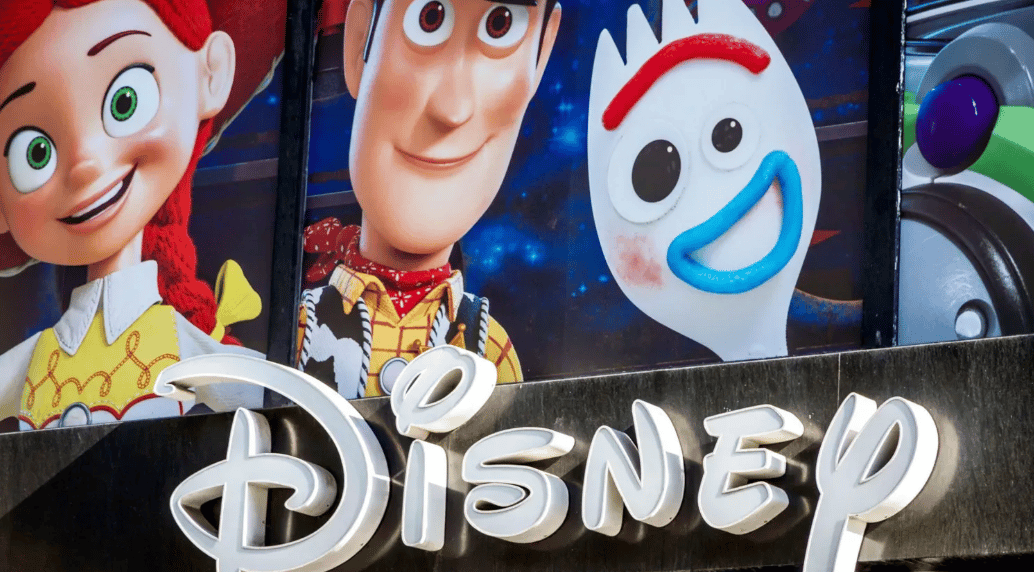
The debate over AI, copyright, and creative labor took a new turn after Disney announced a three-year partnership with OpenAI, making it the first major content licensing partner on Sora. Photo Credit: BBC.
Historically, stories have been one of the most effective methods of storing and transmitting important messages throughout the ages. Through the transmission, the stories changed, yet the central themes remained the same.
This widescale transmission was possible because, while people or cultures can lay claim to a story, they cannot lay claim to the central ideas that drive the stories. In the modern world, the question of what is an original piece of work has taken on a new meaning.
With Artificial Intelligence relying on already existing content, the question now is not whether something is AI or human-generated. It now revolves around whether existing IP safeguards mean anything at all, and if they don’t, what should companies that hold billions worth of assets in IP do with them?
Inside Disney’s partnership with OpenAI
Recently, this conversation found a new dimension when the Walt Disney Company announced a three-year partnership with OpenAI that positions Disney as the first major content licensing partner on Sora, OpenAI's generative AI video platform.
Under the agreement, more than 200 animated, masked, and creature characters from Disney, Marvel, Pixar, and Star Wars will be available for user-generated content creation. The deal includes a $1 billion equity investment from Disney in OpenAI, with warrants to purchase additional equity.
This partnership represents a watershed moment for the entertainment industry. A company that has spent the past year aggressively suing AI platforms for copyright infringement is now choosing to license its most valuable intellectual property to the world's most prominent AI company.
The deal signals a fundamental shift in how major IP holders may engage with generative AI, moving from litigation-first defense to strategic partnership and monetization.
Under the deal, the three-year licensing agreement enables Sora to generate short, user-prompted social videos using Disney IP.
The scope includes costumes, props, vehicles, and iconic environments, but explicitly excludes any talent likenesses or voices. Curated user-generated videos may appear on Disney+, and both companies will collaborate to develop new AI-powered experiences for subscribers.
Crucially, the deal does not allow OpenAI to use Disney content to train its AI models. TechCrunch also notes that the partnership is exclusive for just one year, after which Disney is free to strike similar agreements with other AI companies.
A sharp turn from copyright enforcement
The deal comes at a time when Disney has taken a far more aggressive stance on AI and copyright. In June 2025, Disney and NBCUniversal sued Midjourney, accusing the image generator of producing unauthorized copies of famous characters.
The lawsuit cited examples where copyrighted characters appeared even when users didn’t explicitly ask for them. On the same day the OpenAI partnership was announced, Disney also sent a cease-and-desist notice to Google, claiming its AI tools were infringing Disney copyrights at scale. Character.AI received similar notices last year.
Why this deal matters to OpenAI
For OpenAI, the partnership is as much about positioning as it is about content. The company is facing intense competition and enormous infrastructure costs.
CNBC reports that SoftBank invested $40 billion in OpenAI in late 2025, valuing it at $300 billion, while OpenAI has already committed more than $1.4 trillion to infrastructure and is seeking to raise another $100 billion at a much higher valuation.
Disney CEO Bob Iger has described the deal as a deliberate choice to engage with AI rather than resist it. Speaking to CNBC, he compared the move to Disney’s 2005 decision to distribute content through iTunes, arguing that participating in AI’s rapid growth is preferable to being sidelined by it.
The structure of the agreement also marks a shift in how intellectual property is valued. As Post Alley noted, instead of collecting traditional licensing fees, Disney is receiving equity and warrants in OpenAI, effectively betting on the AI company’s long-term growth. In this model, IP functions less as a product to monetize and more as strategic leverage.
Both companies have emphasised the guardrails built into the partnership. Oversight committees, evolving brand guidelines, and age-appropriate safeguards are central to the agreement, while actor likenesses and voices are explicitly excluded. OpenAI CEO Sam Altman has said Disney will be able to adjust these guardrails over time as the technology evolves.
Variety reports that many Hollywood studios have held back from AI licensing deals because of uncertainty around pricing. By avoiding the use of its content for model training and focusing on controlled user-generated content, Disney has created a template that others may follow.
The Hollywood Reporter notes that Altman has already been approached for similar partnerships, suggesting this deal could accelerate industry-wide negotiations.
The backlash from creators and unions
Since this deal is a departure from how creatives have dealt with AI companies in the past, not everyone is enthused about the idea of Disney cozying up with OpenAI. The deal has also drawn sharp criticism from labor groups and advocacy organizations.
The Writers Guild of America issued its strongest response, arguing that the partnership “appears to sanction the theft of our work.”
In a message to members, the WGA said “OpenAI built its business off our backs” by training on copyrighted material created by guild writers, and announced plans to meet with Disney to scrutinize whether user-generated videos rely on union-created work.
SAG-AFTRA struck a more cautious tone but said it would “closely monitor the deal” to ensure compliance with contracts and laws protecting performers’ image, voice, and likeness. The union acknowledged months of discussions with OpenAI, suggesting that some of the guardrails in the agreement emerged from those talks.
The Animation Guild raised broader concerns about brand integrity. Its executive board warned that Disney’s legacy has been built on tight control of its characters, and that the unpredictability of generative AI risks undermining that legacy even with safeguards in place.
Child safety advocates were more blunt. Fairplay, a nonprofit focused on children’s well-being, called the partnership a betrayal, arguing that while OpenAI claims children are barred from using Sora, Disney characters could still draw young users to the platform.
The criticism follows Fairplay’s November 2025 warning that AI-powered toys and platforms pose developmental risks to children.
Others have raised cultural concerns. As one commentator quoted by Distractify put it, AI-generated fan films risk becoming “the definition of an echo chamber”, offering personalized comfort rather than creative challenge or growth.
A template for Hollywood, or a one-off
The Disney–OpenAI deal is expected to spur similar talks across Hollywood. Variety reports that Sam Altman has already been approached for additional IP licensing deals, describing the agreement as a landmark that sets early standards for responsible AI in entertainment.
After the one-year exclusivity period, Disney can partner with other AI firms, potentially creating a competitive market for licensed generative content.
The future of IP in generative AI
As AI continues to shift the creative space and ownership, the true impact of Disney’s deal with OpenAI remains to be seen. In the meantime, it suggests that, for major IP holders, the future may lie less in trying to lock ideas down and more in deciding how and on whose terms those ideas circulate.
If AI has blurred the line between inspiration and infringement, this partnership is an early attempt to redraw it through control, licensing, and leverage rather than outright resistance.
Whether this approach protects the long-term value of intellectual property or accelerates its transformation into raw material for generative systems will depend on how firmly those guardrails hold, and who ultimately benefits from the stories being retold.
TL;DR
Disney flips from lawsuits to licensing. Three-year Sora deal, $1B equity stake, and 200+ Disney/Marvel/Pixar/Star Wars characters for user-generated videos.
IP becomes equity, not just rent. Disney keeps training rights off the table and treats its IP as strategic leverage in OpenAI’s long-term growth.
Creators and unions see a red line crossed. WGA, SAG-AFTRA, animators, and child-safety advocates warn that this “sanctions the theft, threatens brand integrity, and pulls kids into AI spaces”.
New template or one-off sugar high? Hollywood now has a playbook for AI licensing, but whether it protects IP or just feeds generative systems depends on how hard the guardrails bite.

Headlines You Actually Need
Google vs OpenAI: Google is pushing Gemini deeper into Search, Android, and Workspace, but even its own execs admit ChatGPT still owns the mindshare war.
China vs Nvidia H200: Beijing is reportedly telling local tech firms to pause new H200 orders, nudging them toward domestic AI chips and tightening its grip on semiconductor sovereignty.
Tesla’s Cybercab setback: Tesla just lost the Cybercab trademark, complicating the branding of its long-promised robotaxi service before a single commercial ride has launched.
Build your startup on Framer—Launch fast. Design beautifully.
First impressions matter. With Framer, early-stage founders can launch a beautiful, production-ready site in hours. No dev team, no hassle. Join hundreds of YC-backed startups that launched here and never looked back.
One year free: Save $360 with a full year of Framer Pro, free for early-stage startups.
No code, no delays: Launch a polished site in hours, not weeks, without hiring developers.
Built to grow: Scale your site from MVP to full product with CMS, analytics, and AI localization.
Join YC-backed founders: Hundreds of top startups are already building on Framer.
Eligibility: Pre-seed and seed-stage startups, new to Framer.
*This is sponsored content
Friday Poll
🗳️ How do you see the Disney–OpenAI deal? |
Weekend To-Do
Audit your IP exposure: Map where your brand, content, or data might already be feeding AI systems (via tools, APIs, or partners) and what’s actually in your contracts.
Draft your ‘AI licensing red lines.’ Write a one-pager on what you would and would not allow if an AI company came knocking, training vs. output, guardrails, revenue model, and veto power.
Run a ‘Disney test’ on your roadmap: For your own product or content, ask: if users remix this via AI, what value flows back to you, and what safeguards are non-negotiable before you say yes?
Rate This Edition
What did you think of today's email? |