- Roko's Basilisk
- Posts
- One Nation, Fifty AI Rulebooks
One Nation, Fifty AI Rulebooks
Plus: Snowflake’s AI bet, Disney–Sora tests, and work in 2026.

Roko's Basilisk
January 05, 2026
Here’s what’s on our plate today:
🧪 America’s AI power struggle: Trump vs states over rulebooks.
🧠 Snowflake bet, Disney–Sora tests, 2026 work forecast.
📊 Poll: Who should actually set US AI rules?
🧰 Roko’s Pro Tip: map your AI exposure before regulations hit.
Let’s dive in. No floaties needed…

Explore the essential startup reading database.
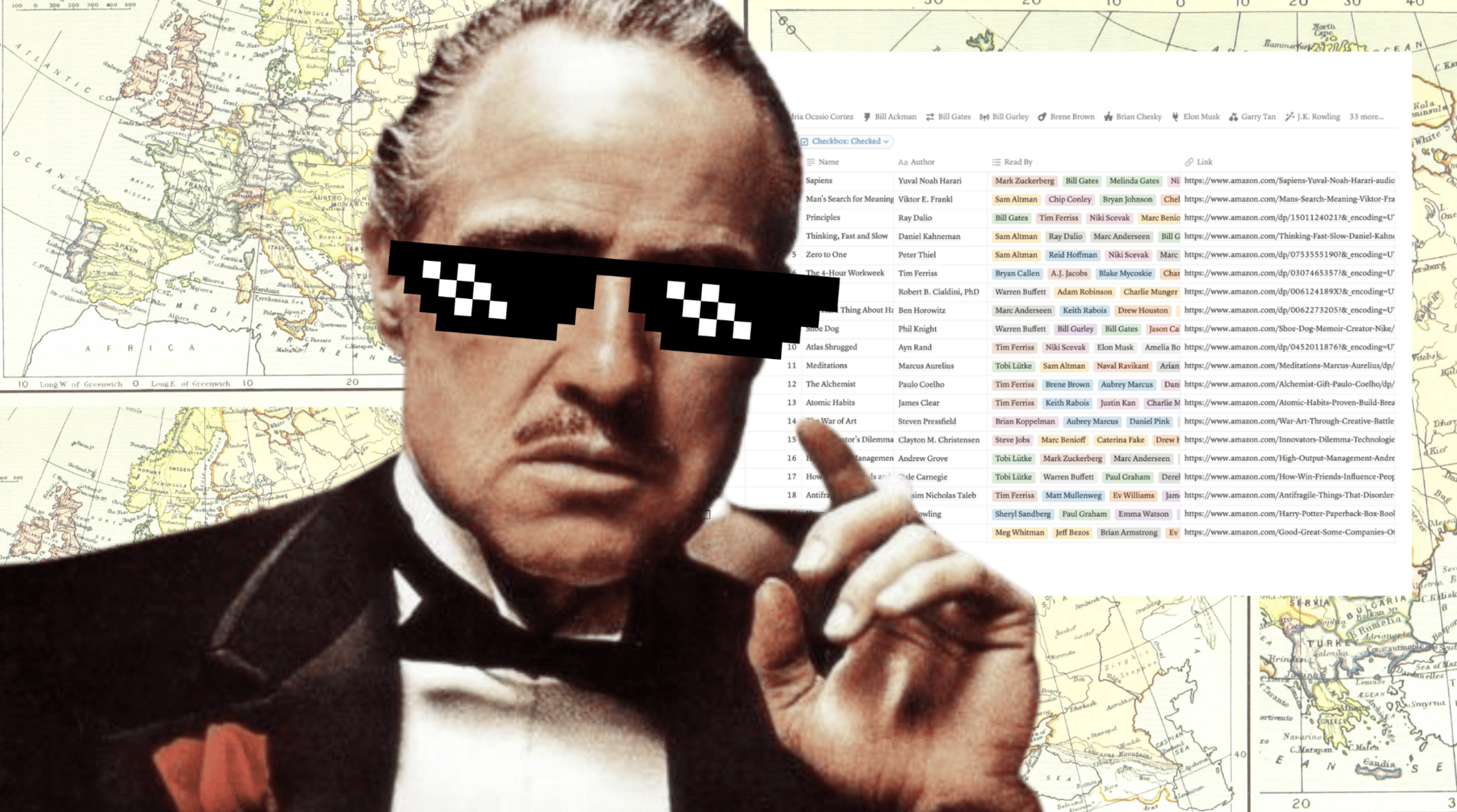
We've diligently curated a list of top-notch articles, blogs, and readings that are pivotal for startup founders. These resources come from reputable platforms and are geared towards fueling your entrepreneurial journey.
And here's the kicker: we've organized it all in a user-friendly Notion database for easy access and tracking. Double win!
Learning from the best is how you become the best. As aspiring leaders and innovators, this curated list serves as a bridge to absorbing the knowledge that has propelled others to success.
*This is sponsored content
The Laboratory
America’s new AI power struggle: Trump vs the states

President Trump signs an order aimed at overriding state AI regulations. Photo Credit Reuters.
Democracy may not necessarily be the best form of government, but nothing better has been invented so far. And one of the key markers of a democratic setup is the ability of participants to disagree on ideas while continuing to function as an institution that protects the interests of citizens.
For centuries, democracy has existed in one form or another, from Greek city-states to modern democratic institutions, and it has undergone many changes and overcome many challenges. Some of these have come in the form of external threats, while others have come in the form of dictatorial tendencies in humans.
Today, the democratic system is facing another challenge: how to regulate an intelligence that is yet to be understood, yet is constantly developing and shaping things around it.
Ever since OpenAI’s ChatGPT introduced the world to artificial intelligence, democracies around the world have been struggling to regulate this novel technology.
While some, like the EU, opted for strict regulation, others, like China, have chosen the path of state control.
The federal-state rift over AI
However, amidst the regulatory confusion, the United States now stands on the cusp of a power struggle. Not between AI and humans. But between the federal government that under President Trump believes in deregulation, and the States, which believe AI companies need to be regulated before it's too late.
The result: a widening rift between the institutions that recently culminated in the President threatening to withhold federal broadband funding from states whose laws regulating artificial intelligence are judged by his administration to be hindering American dominance in the technology.
And this is part of a broader trend where the states and the federal government are disagreeing on the issue of AI regulations.
Trump’s executive order
On December 11, 2025, President Trump signed an executive order called “Eliminating State Law Obstruction of National AI Policy,” setting up a federal framework designed to override state-level AI regulations.
The order creates a new AI Litigation Task Force inside the Department of Justice, giving it authority to sue states that enact their own AI rules. It also ties $42.5 billion in federal broadband funding to state compliance, an aggressive move that surprised many policy experts.
The decision comes at a tense moment. Bipartisan criticism has been growing, with Republican governors Ron DeSantis of Florida and Spencer Cox of Utah joining Democrats in opposing the policy.
At the same time, national concern about AI safety has intensified after several teen suicides were linked to harmful interactions with AI chatbots.
Trump’s order marks a major escalation in the federal government’s attempt to control how AI is regulated. Legal scholars are already questioning whether an executive order can accomplish something Congress repeatedly refused to pass.
Beyond the legal fight, the core issue is larger: who gets to set the rules for AI, and how the U.S. should balance rapid innovation with meaningful protections for the public.
Why Congress refused to preempt the states
The executive order follows a series of failed congressional efforts to preempt state AI laws. The US Senate voted nearly unanimously to remove a 10-year moratorium on the enforcement of state artificial intelligence regulations from Trump's sweeping domestic policy bill before it passed.
Similar provisions were subsequently stripped from the defense spending bill (NDAA) in December 2025 after opposition from both Democratic and Republican lawmakers.
After the effort to slip a similar measure in the defense spending bill failed last week, Sen. Josh Hawley of Missouri posted on X, "This is a terrible provision and should remain OUT."
Rising public pressure and AI safety fears

Witnesses testify before the US Senate on the harms of AI chatbots, September 16, 2025. Photo Credit: Tech Policy.
The dichotomy of the approaches taken by the states and the federal government represents the fault line of how administrations view AI. On one hand, the federal government wants to ensure that the country has a competitive advantage with lax regulatory oversight. On the other, the states want to ensure that citizens are not left to the mercy of big tech companies that control powerful AI models.
In the coming days, the battle for AI regulations is expected to heat up even further as companies continue to push for powerful data centers that need more resources like electricity, water, and land. All of which put them in direct competition with residents of rural areas.
Democratic countries have brought us to the point where the needs of the few cannot trample upon the needs of many for too long. While this system is not perfect, it does help bring about a sense of justice and the rule of law. With AI, democracies face a major challenge.
How to ensure that technology can continue to progress without destroying the delicate legal and ecological ecosystems that allow humanity to thrive.

Roko Pro Tip
 | 💡 If AI sits anywhere near your product or workflow, treat policy risk like technical debt: track where your data lives, which models you’re dependent on, and which jurisdictions you operate in. The teams that map their “AI exposure surface” now will pivot faster when the next executive order or state law drops. |
The context to prepare for tomorrow, today.
Memorandum merges global headlines, expert commentary, and startup innovations into a single, time-saving digest built for forward-thinking professionals.
Rather than sifting through an endless feed, you get curated content that captures the pulse of the tech world—from Silicon Valley to emerging international hubs. Track upcoming trends, significant funding rounds, and high-level shifts across key sectors, all in one place.
Keep your finger on tomorrow’s possibilities with Memorandum’s concise, impactful coverage.
*This is sponsored content
Bite-Sized Brains
Snowflake’s AI upside: Analyst pitches Snowflake as a misunderstood data-cloud winner that could ride enterprise AI demand despite its choppy stock performance.
Disney flirts with Sora: Disney is testing OpenAI’s Sora video model for cheaper, faster content, stoking fresh Hollywood worries about jobs, IP, and AI-made footage.
2026: work under AI pressure. Forbes sketches 2026 as more automation, more “AI operator” roles, and sharper divides between companies that retrain people and those that just chase tools.
Monday Poll
🗳️ In this emerging Trump vs. the states fight over AI, whose approach do you trust more? |
Meme Of The Day
Rate This Edition
What did you think of today's email? |
