- Roko's Basilisk
- Posts
- The Reverse Acqui-Hire Era
The Reverse Acqui-Hire Era
Plus: Chicago robot ban, India’s ChatGPT boom, and Genie’s gaming shock.

Roko's Basilisk
February 20, 2026

Here’s what’s on our plate:
🧪 Adept, Amazon, and the reverse acquihire squeeze.
🧠 Chicago bots, India’s ChatGPT boom, and Genie versus studios.
🛠️ Weekend toolkit: practical apps for vendor risk and agents.
📊 Poll: Should enterprises still bet on independent AI startups?
Let’s dive in. No floaties needed…

In partnership with

Ship the message as fast as you think

Founders spend too much time drafting the same kinds of messages. Wispr Flow turns spoken thinking into final-draft writing so you can record investor updates, product briefs, and run-of-the-mill status notes by voice. Use saved snippets for recurring intros, insert calendar links by voice, and keep comms consistent across the team. It preserves your tone, fixes punctuation, and formats lists so you send confident messages fast. Works on Mac, Windows, and iPhone. Try Wispr Flow for founders.
*This is sponsored content
The Laboratory
What Adept’s acquisition by Amazon reveals about the AI startup ecosystem
In periods of rapid technological change, companies often compete not only through products but also through people and ideas. While to an outsider, such periods may be visible only through announcements of corporate deals, to insiders, they are transitional periods in which the boundaries among partnerships, hiring, and acquisitions are blurred.
During such transitions, companies are not always acquired for what they sell, but for what they know and who they employ. The driving force behind such acquisitions is the belief that in fast-moving industries, intellectual capital and specialized expertise often matter more than existing products or revenue streams.
Take, for instance, the example of Facebook’s 2009 acquisition of FriendFeed. At the time, Facebook agreed to acquire FriendFeed and integrate its employees, with FriendFeed’s four founders assuming senior engineering and product roles at the company. Although FriendFeed had built innovative features around real-time sharing, the greater strategic value lay in the team’s expertise and the ideas they brought. These included expertise that would later inform Facebook’s innovations in real-time and social feeds.
In the contemporary AI enterprise market, the pattern seen in FriendFeed’s case is reemerging as AI hyperscalers continue to seek ways to expand their influence.
Adept and the economics of independence
In 2024, Adept AI published a blog post that may be the most candid statement a venture-backed startup has ever made about why it stopped trying to be independent. The company, which had raised over $415M to develop AI to automate any software process, announced that its co-founders and most of its team were leaving for Amazon.
The startup stated that it was taking this decision because continuing to develop foundation models would have required substantial time and effort to raise capital, diverting focus from advancing the company’s agent-focused vision. In simple terms, the announcement reflected the reality that training frontier AI had become so expensive that even a billion-dollar startup could not afford to do both.
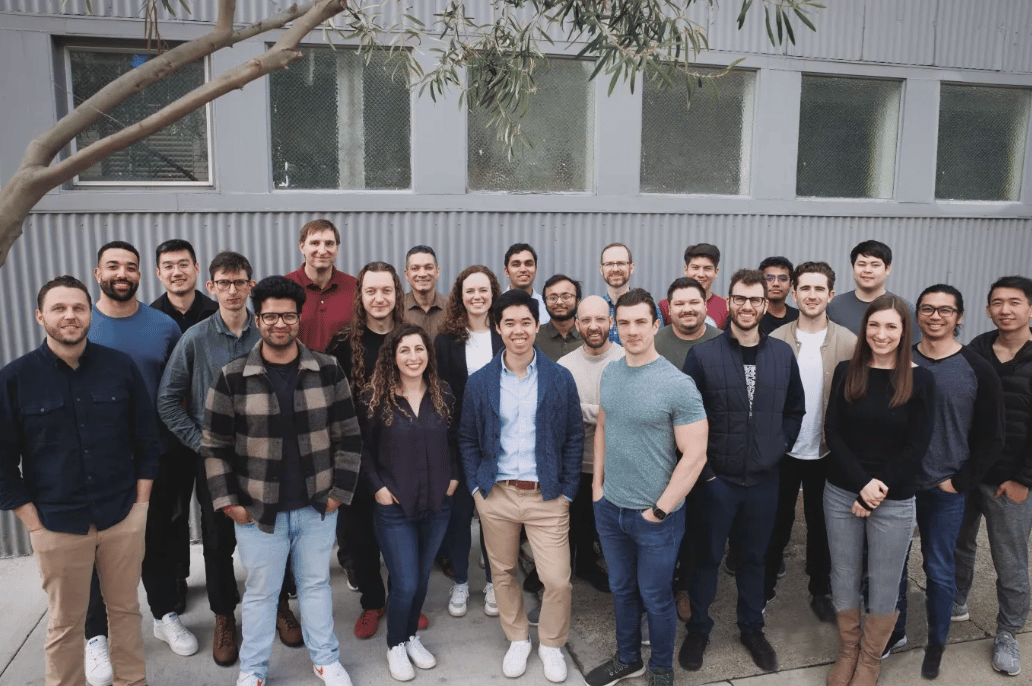
The Adept AI team, before Amazon licensed its technology and hired a significant portion of the startup’s leadership and staff. Photo Credit: Adept.
The company was not shutting down; it had funding from Microsoft and NVIDIA, a high-profile founding team that included Ashish Vaswani and Niki Parmar, and functioning technology. What it lacked was the massive compute infrastructure required to compete with hyperscalers, which would have demanded tens of billions of dollars to sustain.
So Amazon licensed Adept’s models and datasets, hired the founders and about two-thirds of the staff, and left the remaining entity under new leadership.
And this would not be the last time a company faced the same challenges as Adept or met the same fate.
Reverse acqui-hire becomes the norm
Between March 2024 and July 2025, at least six major transactions followed the same structure: hire the founders, license the technology, leave the company technically alive.
Microsoft paid more than $650M for a non-exclusive license to Inflection AI’s models and hired most of Inflection AI’s 70-person team in March 2024. Google spent $2.7B to bring the co-founders of Character AI back to DeepMind that August. Amazon struck a $380M licensing deal with robotics startup Covariant the same month, hiring all three founders and a quarter of the workforce.
In July 2025, Google paid $2.4B to hire Windsurf’s CEO and co-founder, along with approximately 40 senior engineers, just hours after OpenAI’s $3B acquisition offer expired. And Meta committed $14.3B to acquire a 49% stake in Scale AI, hiring its founder, Alexandr Wang, to lead its superintelligence unit.
The combined value of these deals exceeds $22B. None triggered a mandatory federal merger review, and the term the industry adopted for such deals became a headline. Reverse acqui-hire was the latest and the path of least resistance for hyperscalers to acquire new technology and workforce to continue developing AI capability.
The structure of these transactions is not accidental. They reflect a deeper shift in how power, talent, and technology are consolidated in the AI industry. Rather than pursuing full acquisitions that invite regulatory scrutiny, hyperscalers can secure similar strategic advantages through licensing arrangements and targeted hiring. Intellectual property moves, key researchers relocate, and competitive threats are neutralized, all while the original companies often remain legally intact.
For observers of the AI startup ecosystem, these deals raise some important questions that extend beyond individual deals. When a company’s founders and core teams depart, what remains of the vendor relationship, product roadmap, and long-term support? More broadly, how should regulators interpret transactions that resemble acquisitions in economic substance but not in legal form? As reverse acqui-hire deals become more common, they expose the growing gap between the pace of AI industry evolution and the regulatory frameworks designed to oversee market concentration and competition.
Regulation struggles to keep pace
While these deals were solidified, regulators were also watching, contemplating their next move.
The FTC’s January 2025 staff report clearly identified the structural risks of such deals. It documented how partnerships provide hyperscalers certain consultation, control, and exclusivity rights over AI developer partners, and how cloud spending commitments create lock-in. The report noted that AI developers could be fully acquired by the Cloud Service Providers (CSPs) in the future.
However, since AI’s impact goes way beyond tech circles, political pressures, not legal mandates, would shape the startup landscape.
The Trump administration’s July 2025 AI Action Plan directed the FTC to review all prior AI investigations to ensure none “unduly burden AI innovation.” FTC Chair Andrew Ferguson cautioned against “headlong regulation” while also acknowledging the need to prevent Big Tech from controlling AI innovators. The result is a posture that is rhetorically concerned with concentration but practically permissive toward the deals that create it.
The German Federal Cartel Office (FCO) classified the Microsoft/Inflection deal as a concentration under German merger law, a significant precedent, but lacked jurisdiction to act. FCO president Andreas Mundt has called for legislative reform to capture such transactions; however, for now, the deals continue unimpeded.
The blind spot for enterprise buyers
Even as the regulatory debate continues, the more immediate questions concern enterprises working on the implementation layer of AI and those seeking to partner with and use their products.
This is important for anyone responsible for selecting AI vendors within a large organization. The standard evaluation criteria, financial stability, product roadmap, customer base, and competitive positioning, do not account for what happened to Adept, Inflection, Covariant, or Windsurf.
They do not ask whether a startup’s founding team can leave overnight. They do not assess whether the core technology is structured for licensing in a single transaction. They do not consider whether a hyperscaler can absorb a vendor’s research capability without ever acquiring the company.
The timing makes this gap especially consequential, as most enterprises are still in the early stages of adopting agentic AI, the very category these startups were building.
Deloitte’s 2025 survey found that 38% of organizations are running pilots, but only 11% have anything in production. Lucidworks polled over 1,600 AI leaders and found that just 6% have fully implemented agentic AI. Companies are choosing which vendors to build on right now, in a market where the vendors themselves have proven structurally fragile.
The investment flowing into this space reflects enormous confidence. The agentic AI market is projected to reach $41.3B by 2030. Gartner forecasts that 40% of enterprise applications will embed AI agents by the end of 2026. But Davenport and Bean at MIT Sloan Review warn that agents are already entering Gartner’s “trough of disillusionment” this year.
So the question facing enterprise buyers is not simply whether the technology works. It is the harder one: will the company selling it still resemble the same company by the time a pilot becomes a production deployment?
What remains after founders leave
Adept AI is, as of this writing, still there—the website loads. The product exists. But the people who co-invented the Transformer architecture and co-founded the company are at Amazon. The CEO who led it is at Amazon. The models and datasets that powered it are licensed to Amazon. And the blog has gone quiet.
None of that means Adept is finished. It may build something valuable under new leadership. But Adept’s story is not really about Adept alone. It is about a pattern that keeps repeating: a startup builds something impressive, a hyperscaler absorbs the talent and technology without buying the company, and what remains is smaller, quieter, and less certain than what came before.
The deeper question the reverse acqui-hire raises is whether the independent AI startup, the kind that enterprises are building their strategies around today, is a lasting part of the market or a temporary stage before everything consolidates into a handful of giant platforms. Six deals totaling more than $22B in 16 months point toward consolidation. And the frameworks that enterprise procurement teams rely on to make multi-year technology bets have not yet adjusted for that possibility.
As the AI industry continues to evolve, the acqui-hire is no longer an occasional tactic. It is shaping which companies survive, which disappear in all but name, and how the balance of power in enterprise AI is being redrawn. The companies making long-term bets on this technology would do well to recognize what these deals reveal: in the current AI landscape, the most capable startups may also be the most vulnerable.
TL;DR
Adept shows that even ‘successful’ AI startups can’t afford frontier models.
Hyperscalers now hoover up talent via reverse acqui-hires, not classic M&A.
Regulators see the risk, but current rules barely touch these deals.
Enterprise buyers risk betting on vendors whose core teams quietly vanish.

Headlines You Actually Need
Chicago bots hit a wall: Chicago’s 1st Ward blocks delivery robot expansion after residents complain about clogged sidewalks, injuries, and data hoarding.
India’s ChatGPT obsession: Sam Altman says India now has 100M weekly ChatGPT users, cementing it as OpenAI’s second-largest and fastest-growing market.
Genie vs game studios: The Verge dissects Google’s Project Genie, where messy but fast AI-built game worlds already threaten traditional dev jobs and craft.
Build your startup on Framer—Launch fast. Design beautifully.
First impressions matter. With Framer, early-stage founders can launch a beautiful, production-ready site in hours. No dev team, no hassle. Join hundreds of YC-backed startups that launched here and never looked back.
One year free: Save $360 with a full year of Framer Pro, free for early-stage startups.
No code, no delays: Launch a polished site in hours, not weeks, without hiring developers.
Built to grow: Scale your site from MVP to full product with CMS, analytics, and AI localization.
Join YC-backed founders: Hundreds of top startups are already building on Framer.
Eligibility: Pre-seed and seed-stage startups, new to Framer.
*This is sponsored content
Friday Poll
🗳️ How much do you trust independent AI startups as long-term vendors? |
Weekend To-Do
Rate This Edition
What did you think of today's email? |