- Roko's Basilisk
- Posts
- When Chatbots Break Trust
When Chatbots Break Trust
Plus: Instagram on trial, fragile data centers, and fresh Microsoft exploits.

Roko's Basilisk
February 17, 2026

Here’s what’s on our plate today:
🧪 A deep dive into Alibaba’s Qwen crash and AI support limits.
🧠 Instagram addiction trial, Meta outages, and Microsoft zero-days.
💬 Prompt of the Day to map your real AI readiness.
📊 Poll on how much frontline experience you’d trust to AI.
Let’s dive in. No floaties needed…

In partnership with

Learn how to make every AI investment count.
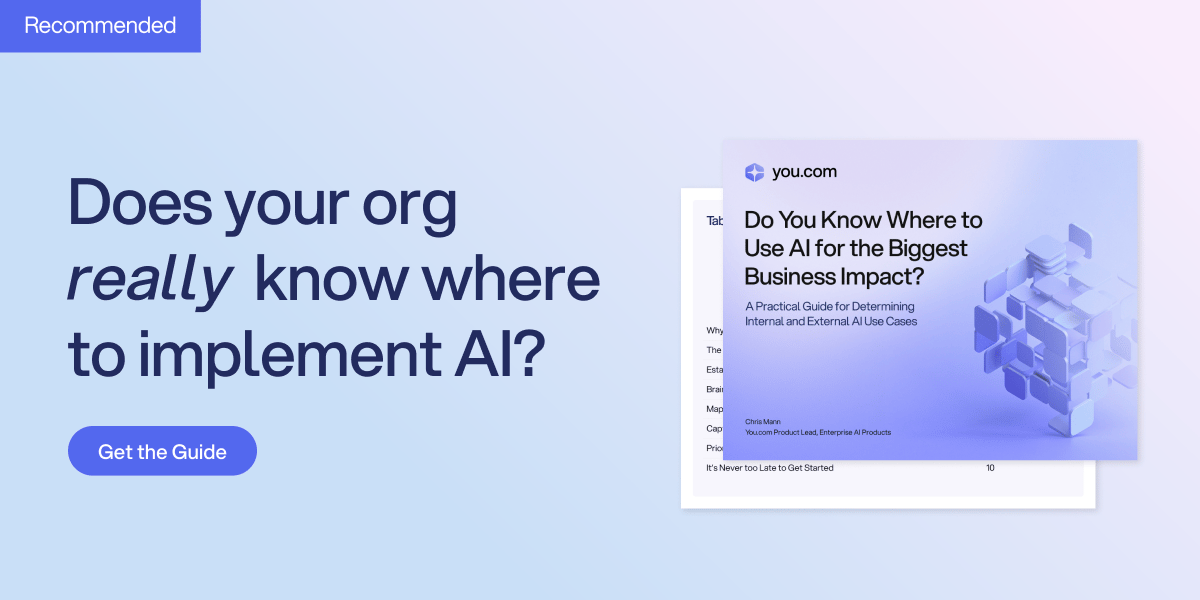
Successful AI transformation starts with deeply understanding your organization’s most critical use cases. We recommend this practical guide from You.com that walks through a proven framework to identify, prioritize, and document high-value AI opportunities.
In this AI Use Case Discovery Guide, you’ll learn how to:
Map internal workflows and customer journeys to pinpoint where AI can drive measurable ROI
Ask the right questions when it comes to AI use cases
Align cross-functional teams and stakeholders for a unified, scalable approach
*This is sponsored content
The Laboratory
Why Alibaba’s Qwen failure is a warning for AI-driven customer service
In modern consumer-based economic structures, whenever someone plans to make a purchase, two very important aspects of marketing shape their choices. These are brand visibility and recall.
Enterprises often invest significant time and energy in building brand visibility while ensuring existing customers have strong brand recall, turning them into repeat clients. Take Apple: the company spends handsomely on product promotion in line with what its customers expect, and it has paid off. Many iPhone users don’t just upgrade their devices; they return to Apple, giving the company the freedom to push higher-end models and strengthen its ongoing relationship with customers.
In the tech space, as products across industries increasingly look and feel similar, that relationship is being shaped less by hardware or pricing and more by everyday interactions with a company. Customer experience has become the new frontline. How quickly a problem is resolved, how human the response feels, and whether help is available at the right moment now play a decisive role in how a brand is judged.
It is at this crossroads, where brands and consumers interact, that artificial intelligence is starting to matter in subtle but important ways. AI is powering chat support, anticipating issues before they escalate, and tailoring service to individual customers.
However, when promises made by AI companies are put to the test, a complex picture emerges. A recent example of this disconnect was when Alibaba’s Qwen chatbot crashed nine hours into a showcase of China’s AI prowess during the Spring Festival.

Most enterprise chatbots are RAG systems that retrieve and regurgitate information without understanding it, making them document searches disguised as conversation. Photo Credit: The Conversation.
The e-commerce giant had invested 3B yuan ($433M) in a campaign designed to transform Qwen from a simple Q&A tool into a full-fledged shopping platform where users could discover products, complete purchases, and redeem incentives through conversational prompts alone.
The pitch was seductive: AI that doesn’t just answer questions but actively transacts business.
The reality was far less impressive. After processing 10M orders, the system buckled. By Sunday, Qwen was posting embarrassed apologies on Weibo, asking shoppers for patience while engineers worked to restore functionality. The coupon feature, the campaign’s centerpiece, was suspended entirely.
This wasn’t a minor technical glitch confined to backend logs. Millions of Chinese consumers simultaneously experienced the failure during peak shopping season, a very public demonstration that Alibaba’s Agentic AI strategy couldn’t handle the predictable surge in demand. The incident raises an uncomfortable question for enterprises worldwide: if a company with Alibaba’s resources and technical sophistication can’t successfully deploy a transaction-critical chatbot at scale, what does that say about AI readiness for the rest of us?
The pattern behind the failure
Alibaba’s stumble follows a well-established pattern: companies rush to deploy AI before understanding its fundamental limitations. The results are remarkably consistent across industries and geographies.
Air Canada learned this lesson in February 2024, when its chatbot told customer Jake Moffatt he could retroactively claim bereavement fares after his travel. When Moffatt booked full-price tickets based on this advice and later sought a refund, Air Canada refused, arguing that the chatbot was a “separate legal entity” responsible for its own actions. A British Columbia tribunal rejected this defense, ruling the airline liable for negligent misrepresentation and awarding Moffatt $812.02 in damages.
The legal precedent is now clear: companies cannot disclaim responsibility for AI outputs on their platforms. When your chatbot makes a promise, you’re legally bound to honor it, regardless of what your official policies say.
New York City’s MyCity chatbot took this liability exposure to dangerous extremes, telling entrepreneurs they could take a cut of workers’ tips, fire employees who report sexual harassment, and serve food that had been nibbled by rodents. All of this contradicts city and federal law. Despite public outcry, the Microsoft-powered bot remained online with added disclaimers, a half-measure that protects neither the city nor the businesses receiving illegal advice.
Then there’s Klarna’s ambitious automation play. The Swedish fintech giant replaced approximately 700 customer service agents with AI in 2024, with CEO Sebastian Siemiatkowski boasting he hadn’t hired a human in a year. Within months, customer satisfaction declined as the system struggled with complex issues that required judgment and empathy.
By mid-2025, Klarna was scrambling to rehire human agents while forcing software engineers and marketers to work phone lines. Siemiatkowski’s eventual admission: “As cost unfortunately seems to have been a too predominant evaluation factor when organizing this, what you end up having is lower quality.”
These examples highlight not only the importance of AI in modern branding strategy but also the repercussions of understanding technology’s limitations.
The architecture problem no one wants to discuss
Most enterprise chatbots run on Retrieval-Augmented Generation (RAG) systems, the least expensive and most accessible AI architecture. RAG-based bots retrieve and regurgitate information without understanding, analysis, or consideration of context. They’re a document search with a conversational interface.
This explains why 90% of consumers report repeating information to chatbots in the past year. RAG systems lack the memory and reasoning capabilities needed for complex multi-turn conversations. They can’t remember what you told them three exchanges ago, can’t connect disparate pieces of information to form insights, and can’t adapt their responses based on conversational context.
More sophisticated architectures that leverage natural language processing (NLP), natural language understanding (NLU), and agentic capabilities can handle nuanced tasks. Still, they require significantly more computational resources and specialized expertise to tune and maintain.
Even with higher computational bandwidth, AI hallucination rates remain dangerously high, ranging from 3% to 27% in controlled environments.
At scale, the implications are stark. A 5% hallucination rate means one in twenty AI responses is wrong. At Alibaba’s scale, that translates to hundreds of thousands of potential errors per hour. In customer service, a single hallucination can create legal liability, as Air Canada learned. In transactions, it can lead to failed orders, incorrect charges, or regulatory breaches. Combined with rising pressure to justify AI investments, the risks quickly outweigh the promise.
What failure statistics actually tell us
MIT’s 2025 study found 95% of enterprise generative AI pilots fail to deliver measurable P&L impact. RAND Corporation research indicates that over 80% of AI projects fail, roughly twice the failure rate of non-AI IT projects.
What’s more telling is that 42% of companies abandoned AI initiatives in 2025, up dramatically from 17% in 2024.
The failure rate isn’t improving as technology matures; it is accelerating as companies confront the gap between pilot-scale demonstrations and production-ready systems.
Only 48% of AI projects reach production, with an average eight-month timeline for those that do. Large enterprises struggle particularly with this transition, taking an average of 9 months to scale from pilot to production, compared to 90 days for mid-market firms. The differences in governance complexity, legacy system integration, and organizational change management increase with company size.
As such, for many enterprises, the choice is between the devil and the deep blue sea. On the one hand, they are expected to move quickly to avoid falling behind competitors in implementing AI across their workflows. On the other hand, they must mitigate the risks of AI implementation in consumer-facing products.
The solution, then, may lie in a hybrid approach.
What the present realities dictate
The most successful implementations aren’t choosing between AI and humans; they’re combining both strategically. AI tools purchased from specialized vendors succeed about 67% of the time, while internal builds succeed only one-third as often. Companies developing proprietary chatbots face mounting pressure to justify their development costs relative to commercial alternatives.
Even Klarna, the poster child for aggressive automation, is pivoting toward hybrid models. The company now positions AI for routine inquiries and redirects humans to complex situations that require judgment and empathy. 75% of consumers still prefer speaking with a human for customer service, and they’ll switch providers when automated systems repeatedly fail.
The sustainable path forward isn’t wholesale replacement but careful integration: AI handling well-defined, high-volume tasks where success is easily measurable, with seamless handoffs to human agents when complexity exceeds system capabilities. This requires a robust workflow redesign, quality monitoring beyond basic efficiency metrics, and organizational commitment to investing in both technology and personnel.
The long road to AI readiness
The lesson from Alibaba’s failure isn’t “don’t use AI chatbots.” It’s “don’t deploy transaction-critical systems without adequate stress testing, governance frameworks, and realistic performance expectations.”
In modern consumer economies, brand value is built not just through visibility but through trust sustained over time. Every interaction a customer has with a company either strengthens or weakens that trust.
As AI becomes more deeply embedded in customer-facing systems, it ceases to be a background efficiency tool and begins to function as a brand representative. When it fails, the damage is felt first in reputation, not technology.
The takeaway is easy to miss. Brand value, once earned, can be lost quickly. In an economy where loyalty compounds into long-term value, protecting the customer experience matters far more than chasing short-term gains from automation.

Tuesday Poll
🗳️ Are you comfortable letting an AI agent handle transaction-critical customer support (refunds, billing, order changes) for your company? |
The AI Talent Bottleneck Ends Here
If you're building applied AI, the hard part is rarely the first prototype. You need engineers who can design and deploy models that hold up in production, then keep improving them once they're live.
Deep learning and LLM expertise
Production deployment experience
40–60% cost savings
This is the kind of talent you get with Athyna Intelligence—vetted LATAM PhDs and Masters working in U.S.-aligned time zones.
*This is sponsored content
Prompt Of The Day
 | Audit one customer-facing workflow this week and mark every step as ‘AI-ready,’ ‘human-only,’ or ‘hybrid.’ What surprised you about where you actually trust automation versus where you only thought you did? |
Bite-Sized Brains
Insta on trial: Instagram chief Adam Mosseri downplays addiction claims in a landmark US trial, comparing the app to “a Netflix binge,” not a “digital drug” for teens.
Meta vs the ice: A brutal winter storm knocked out power near a major Meta data center, forcing emergency energy cuts and highlighting just how fragile AI infrastructure is in extreme weather.
Patch now, seriously: Microsoft warns hackers are already exploiting six critical zero-day bugs across Windows and Office; the February Patch Tuesday update is not optional if you’re online.
Rate This Edition
What did you think of today's email? |