- Roko's Basilisk
- Posts
- Anthropic’s Cowork Shockwave
Anthropic’s Cowork Shockwave
Plus: Musk’s Mars wobble, T-Mobile AI translating, and OpenAI HR drama

Roko's Basilisk
February 12, 2026

Here’s what’s on our plate today:
🧪 Anthropic Cowork plugins and the software selloff shock.
📰 Musk pauses Mars, T-Mobile translating, and OpenAI turmoil.
🧰 3 Things Worth Trying: New tools to prototype AI coworkers.
📊 How threatened should SaaS feel by Anthropic-style agents?
Let’s dive in. No floaties needed…

In partnership with

Learn how to make every AI investment count.
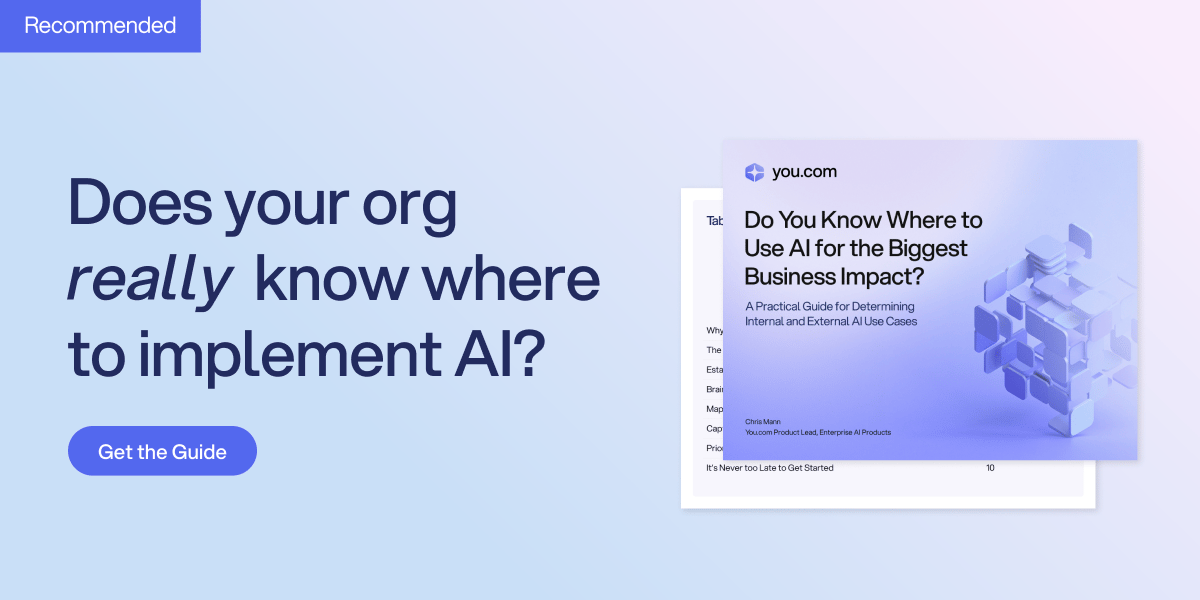
Successful AI transformation starts with deeply understanding your organization’s most critical use cases. We recommend this practical guide from You.com that walks through a proven framework to identify, prioritize, and document high-value AI opportunities.
In this AI Use Case Discovery Guide, you’ll learn how to:
Map internal workflows and customer journeys to pinpoint where AI can drive measurable ROI
Ask the right questions when it comes to AI use cases
Align cross-functional teams and stakeholders for a unified, scalable approach
*This is sponsored content
The Laboratory
Why Anthropic’s Cowork Plugins rattled the global software industry
Since the dawn of civilization, humans have relied on communication to achieve things no individual could accomplish alone. Yet that ability had limits. People could use tools and interact with the world around them, but they could not truly communicate with it.
That began to change with the invention of computers. Early machines were silent and inert, capable of nothing until humans fed them instructions. Once they did, computers came alive, executing tasks faster and more precisely than people ever could. Those instructions were the first forms of software, brittle commands hardwired into switches and punched cards, designed for a single purpose and then discarded.
As software evolved, computers shifted from rigid machines into adaptable tools. Human-readable programs spread across devices, entered everyday life through personal computers, and quietly reshaped workflows. Today, with AI, software no longer follows rules. It learns, adapts, and responds. The machines have changed, but the role of software has not. It gives computers their purpose and, now, their voice.
The significance of software in today’s world is reflected in the immense economic value generated by companies that develop and sustain modern software products. As of 2025, the software-as-a-service (SaaS) industry was valued at $315.68B and projected to reach $375.57B in 2026. That was until the industry faced challenges from AI.
Markets react to AI
On 4 February 2026, the implications of this rapid advancement in how humans communicate with computers became apparent when software company stocks crashed, wiping out roughly $830B in value over six days.

Global software stocks tumbled on February 4, 2026, after Anthropic’s new AI tool sparked investor fears, erasing about $830B in market value and sending some shares down as much as 16%. Photo Credit: MoneyControl.
Major companies that sell legal databases, financial data, and business software saw their stock prices plummet by 10-16% in a single day.
Although discussions about the impact of AI tools on software companies have been ongoing since 2022, when OpenAI initiated the AI arms race, the selloff was triggered by the release of a new tool from Anthropic.
Anthropic’s catalyst
The Anthropic tool is part of a broader strategy by AI companies to integrate AI workflows into the workplace. The latest tool, Cowork plug-ins, is an agentic AI tool designed for non-technical enterprise users.
These plug-ins are specialized mini-assistants that automate department-specific tasks across legal, sales, marketing, customer support, and data analysis functions. Companies can customize plug-ins to handle their specific workflows, telling Claude which tools and data to access and how to execute critical business processes.
Anthropic open-sourced 11 internal plug-ins as templates, emphasizing that custom versions require minimal technical expertise to build and deploy.
Investor panic sets in
The reaction to this tool was swift. Investors perceived the tool as an existential threat. A shift for AI companies from simple chatbots into the application layer, where established software firms generate billions in revenue.
Companies such as Thomson Reuters, which charge substantial fees for legal database access and research tools, saw their stock plummet 16% as investors questioned whether businesses would continue to pay for expensive, specialized software when AI agents could perform the same functions at lower cost.

The market panic reflects broader uncertainty about AI’s trajectory and its potential to disrupt entire industries.
Skepticism from leaders
However, while investors may have reacted, not everyone is convinced that AI companies are out to take over the software development market.
Among them, NVIDIA CEO Jensen Huang’s voice is particularly important. Huang dismissed fears that artificial intelligence will replace software and related tools, and called the idea “illogical.”
Speaking at a Cisco Systems–hosted AI conference in San Francisco, Huang said fears that AI could sideline software companies are misplaced, arguing that AI will continue to depend on existing software rather than reinvent core tools from the ground up.
Mark Murphy, head of U.S. enterprise software research at JPMorgan, echoed his thoughts and said it “feels like an illogical leap” to say a new plug-in from an LLM would “replace every layer of mission-critical enterprise software.”
Software’s real risk
At the same time, software is considered particularly vulnerable to disruption, as tools such as Claude automate routine tasks that have traditionally supported the industry’s pricing power.
Many analysts share this view. They liken AI’s disruptive potential to Amazon’s rise from an online bookstore into a retail and cloud giant. This comparison appeals to investors wondering whether AI firms will grow from niche tools into full platforms that could sideline traditional software.
James St. Aubin, chief investment officer at Ocean Park Asset Management in Santa Monica, California, told Reuters that “The selloff, which arguably started last quarter, is a manifestation of an awakening to the disruptive power of AI.”
He went on to say that what once looked like unbreakable moats around software companies now seems much thinner as AI-generated products intensify competition. And that the selloff may be an overreaction, but the risk is real, and valuations should reflect it. The bigger worry, according to him, is that this could be an early warning sign for the labor market.
Jobs on the line
Aubin suggests that the effects of AI will extend beyond financial markets, with the selloff in software stocks signaling potential disruption to millions of office jobs across law, finance, sales, and other white-collar fields.
Consider what’s at stake: junior lawyers currently spend hours researching case law in databases like Westlaw (owned by Thomson Reuters, which lost 16% in a single day). If an AI plug-in can instantly pull relevant legal precedents and draft memos, those entry-level positions become harder to justify.
The same logic applies to financial analysts who compile reports from data platforms like MSCI (down 7% in one session) and to sales teams who spend hours updating CRM systems and drafting client proposals.
The concern isn’t that AI will replace these jobs overnight, but that it could hollow out the entry and mid-level positions where professionals build expertise before advancing. If companies can automate foundational work, the traditional career ladder loses crucial rungs.
An uncertain future awaits
The uncertainty amplifies the fear. No one knows how quickly these AI tools will improve or which specialized knowledge will prove irreplaceable.
Shares of RELX and the London Stock Exchange, which provide financial data and market infrastructure, declined by 14% and 13%, respectively, amid uncertainty about the timeline. That uncertainty sent money managers running for the exits, unwilling to wait and see whether their portfolio companies would survive the transition.
Humans have worked for generations to communicate with computers, spending billions of dollars on research and development to reach a point where computers can understand simple human-language instructions.
The dream is coming true at a rapid pace, and the investment markets are beginning to reflect the shift.
Whether this transition is another human effort to anthropomorphise computers, or an actual breakthrough in the evolution of computers, remains to be seen. However, one thing is clear: turbulent times lie ahead, and investors are already reacting to them.

Quick Bits, No Fluff
Musk Pauses Mars: Elon Musk has put his Mars city plans ‘on ice’ for at least five years, shifting SpaceX’s focus to a self-growing Moon city instead and publicly spiraling about the decision on X.
T-Mobile Live Translate: T-Mobile is rolling out a network-level Live Translation feature that uses AI to translate voice calls and texts in real time across dozens of languages, no extra app required.
OpenAI Policy Clash: An OpenAI policy executive who opposed adding an adult mode to ChatGPT was reportedly fired and has filed a discrimination claim, saying she was sidelined and terminated after raising safety and bias concerns.
Build your startup on Framer—Launch fast. Design beautifully.
First impressions matter. With Framer, early-stage founders can launch a beautiful, production-ready site in hours. No dev team, no hassle. Join hundreds of YC-backed startups that launched here and never looked back.
One year free: Save $360 with a full year of Framer Pro, free for early-stage startups.
No code, no delays: Launch a polished site in hours, not weeks, without hiring developers.
Built to grow: Scale your site from MVP to full product with CMS, analytics, and AI localization.
Join YC-backed founders: Hundreds of top startups are already building on Framer.
Eligibility: Pre-seed and seed-stage startups, new to Framer.
*This is sponsored content
Thursday Poll
🗳️ How do you think Anthropic-style agent plug-ins will impact SaaS over the next 3 years? |
3 Things Worth Trying
Zapier AI Agents: Use Zapier’s AI agents to stitch together your core tools (HubSpot, Slack, Notion, Google Sheets) into end-to-end workflows, and see where an agent can actually replace a mini SaaS in your stack.
Magical AI Calendar Partner: Try Magical as an AI time partner that joins your calendar, summarizes meetings, and turns them into tasks and follow-ups so you can prototype Cowork-style automation around your schedule.
Tability for AI-Assisted OKRs: Use Tability to let an AI layer help track OKRs and KPIs across teams, auto-summarizing progress and surfacing stuck goals—basically a lightweight, goal-focused agent for your execution layer.
Rate This Edition
What did you think of today's email? |
