- Roko's Basilisk
- Posts
- When AI Hits The Heartland
When AI Hits The Heartland
Plus: Rural pushback, global AI land grabs, Instacart bots, and a democracy stress test.

Roko's Basilisk
December 16, 2025

Here’s what’s on our plate today:
🧪 Can the U.S. actually unite around the AI race?
🧠 Bite-Sized Brains: UK frontier rules, India free AI, Instacart agents.
📊 Poll: data centers vs democracy—what trade-off would you pick?
✏️ Prompt: write your own AI-town-hall statement in four sentences.
Let’s dive in. No floaties needed…

In partnership with

Introducing the first AI-native CRM

Connect your email, and you’ll instantly get a CRM with enriched customer insights and a platform that grows with your business.
With AI at the core, Attio lets you:
Prospect and route leads with research agents
Get real-time insights during customer calls
Build powerful automations for your complex workflows
Join industry leaders like Granola, Taskrabbit, Flatfile and more.
*This is sponsored content
The Laboratory
Can the U.S. unite around the AI race?
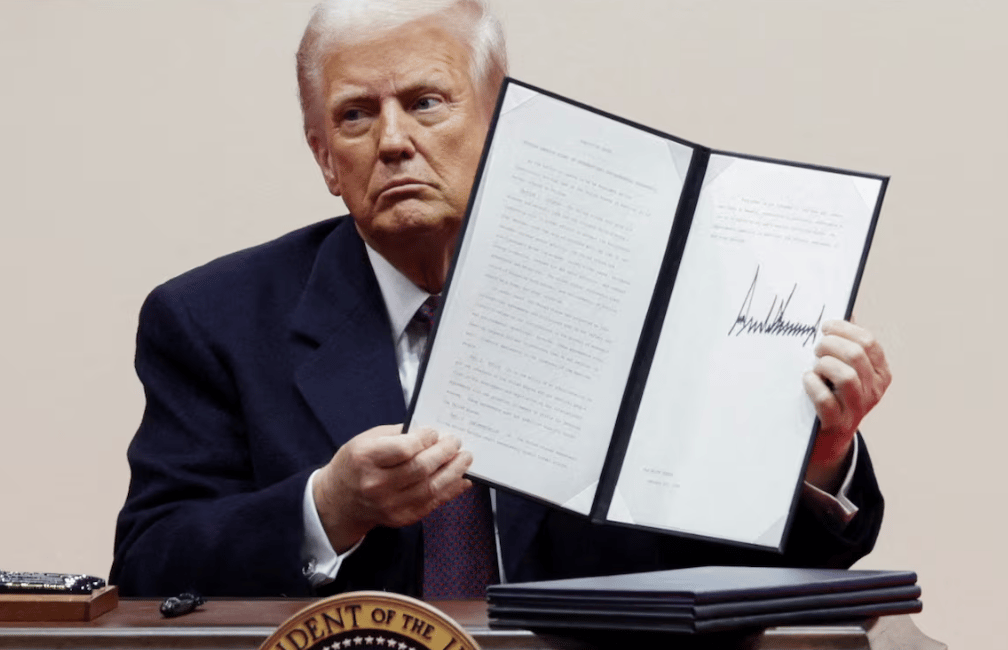
U.S. President Donald Trump displays a signed executive order during a rally on his second inauguration day at Capital One Arena in Washington. Photo Credit: Reuters.
The modern democratic institutions that govern most nation-states around the world have evolved over centuries. During the course of history, they have had to undergo many trials and tribulations to take their current shape and form.
Despite the changing social structures, religious identities, and technological advancements, democracies have survived because they rely on one very crucial aspect of nation-building. This is building consensus amongst the citizens to pursue a common goal, one that benefits the majority, not just the ruling elite.
In November 2022, democracies around the world watched as OpenAI unleashed the era of AI. This put in motion a chain reaction. With the spotlight on a new race, the AI race, nations had to start competing not just against each other for technological supremacy, but also start convincing their citizens that winning the AI race would be crucial for a viable future.
The infrastructure surge
Soon, countries including the U.S. began pouring billions of dollars into AI labs and infrastructure to win the AI race, and they have made steady progress. The U.S. is currently estimated to be the home of around 45% of the world’s data centers.
However, according to the current establishment, the massive push for more data centers may not be enough. In January 2025, U.S. President Donald Trump issued an executive order creating “AI Action Zones” and promised to speed up permitting and cut regulatory hurdles for data center construction.
His administration has promoted the policy as a driver of jobs and economic growth, while supporters in the tech sector, including Elon Musk and major investors, have pushed for loosening environmental reviews that slow projects.
The move represents a significant shift from the Biden administration, which placed greater weight on environmental justice and community feedback in infrastructure planning. Trump’s orders specifically targeted the National Environmental Policy Act review process, aiming to streamline approvals for AI-related facilities.
The move represents a significant shift from the Biden administration, which placed greater weight on environmental justice and community feedback in infrastructure planning. Trump’s orders specifically targeted the National Environmental Policy Act review process, aiming to streamline approvals for AI-related facilities.
Yet the rapid buildout is running up against practical limits. Data centers already use an estimated 4% of U.S. electricity, and Goldman Sachs projects that figure could rise to 9% by 2030. In Loudoun County, Virginia, the largest data center hub in the world, about 25% of the region’s power capacity is now devoted to these operations.
This has led to a lack of consensus amongst the citizens of the country, especially amongst rural communities and the political class.
Recently, residents of Danville, Pennsylvania, protested a proposed data center they feared would carve up their farmland and upend the quiet rhythms of their valley.
Despite being ardent supporters of Donald Trump, the protestors are unhappy with Washington’s push to fast-track AI infrastructure, which has driven data-center growth in rural areas around the U.S., where land is cheap.
Rural pushback grows

Volunteers distribute yard signs opposing a data center project in West Virginia. Photo Credit: Getty Images.
Rural communities are increasingly treating data center development as an unwelcome burden.
In Ohio, communities are grappling with how to promote growth while managing the finite resource. According to a report from the NYT, a major Meta data center in Georgia has used up to 500,000 gallons of water a day.
In northwest Ohio, the city of Lima agreed to supply several million gallons daily to a data center whose operator has not been publicly identified. In Jerome Township, Hoyt estimates that one Amazon data center can use roughly 350,000 gallons on its highest-demand days.
Similar conflicts are unfolding in North Dakota, where counties that supported Trump with more than 70% of the vote are resisting projects from Microsoft and other developers. Locals object to farmland being converted for industrial use and to the low-frequency noise from cooling equipment that can travel long distances.
Data centers often occupy hundreds of acres yet employ only 50 to 150 full-time workers, which has disappointed residents who expected meaningful economic benefits.
Noise has become one of the most heated issues. Large hyperscale data centers run cooling systems that generate a constant 70 to 90 decibels, about the same as standing next to a busy highway. People living within a mile report sleep problems and falling property values.
Residents are also unhappy with the rising burden of ensuring data centers have a necessary power supply.
Energy grid constraints
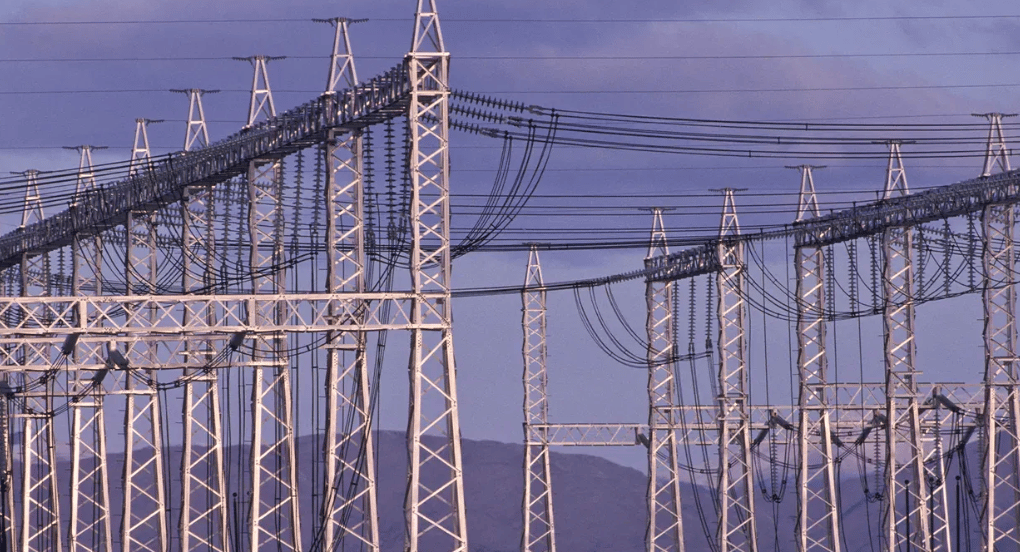
The IEA’s 2025 outlook reports that AI is pushing energy demand to new highs, with data center spending reaching $580 billion. Photo Credit: Alamy.
The electricity required to power these facilities is creating new challenges for utilities. In Georgia, planned data center projects are expected to draw more power than the entire city of Atlanta, according to projections from Georgia Power.
This demand is forcing utilities to keep coal plants online longer and expand natural gas capacity, which conflicts with Trump’s campaign message about lowering reliance on fossil fuels.
In Virginia, Dominion Energy raised its five-year capital expenditure plan as electricity demand from data centers continues to accelerate. According to a Reuters report, the Richmond, Virginia-based utility expects to spend $50.1 billion from 2025 to 2029, up from its previous estimate of $43.2 billion.
Data centers also need large quantities of water to meet their growing cooling needs.
Water constraints
Some systems consume water directly through evaporation, while others recycle it in closed loops but still discharge heated water. Research in npj Clean Water estimates that a small 1 MW data centre using traditional cooling can use around 25.5 million litres of water per year, which is especially troubling in drought-stricken Western states.
In places like Arizona, data centers can use millions of gallons of water, which could have been used by local communities. Local officials who supported projects are now facing recall efforts from residents who say they were kept in the dark by nondisclosure agreements that concealed the center’s water needs until construction was underway.
The demands of data centers are at direct loggerheads with those of residents. Which brings us to the political discourse.
Tech industry leaders who backed Trump’s campaign, including Elon Musk, David Sacks, and Marc Andreessen, are pushing hard for deregulation. They see AI infrastructure as a race the United States cannot afford to lose and want environmental reviews bypassed in the name of national competitiveness.
But polls in Republican-leaning rural areas show that 60 to 70% of residents oppose large data centers once they learn the details about water use, energy demands, and limited job creation.
This puts the sitting President in a difficult position. He is trying to promote American leadership in AI while also appealing to rural voters who prioritize local control, quality of life, and environmental protection in their own communities.
The fight for consensus
The AI race, much like the Space race, demands collaboration and cooperation between different institutions, both political and social. The sheer scale of infrastructure required to sustain the growing demand for AI necessitates the building of consensus between different stakeholders.
If the established democratic institutions are to survive the age of AI, then they will have to prove their mettle once again and show that while democracy may not be the best form of government, it still stands by its core belief: a government of the people for the people.

Bite-Sized Brains
UK MPs push hard on frontier AI rules: More than 100 parliamentarians are backing binding regulation for the most powerful models, citing nuclear-level risks.
Big AI treats India as a free playground: OpenAI, Google, and others are flooding India with free ChatGPT- and Gemini-style access to lock in the next billion users.
Instacart leans into agentic commerce: The grocery giant is piloting ChatGPT-embedded agents that can plan and fill your cart for you.
Build your startup on Framer—Launch fast. Design beautifully.
First impressions matter. With Framer, early-stage founders can launch a beautiful, production-ready site in hours. No dev team, no hassle. Join hundreds of YC-backed startups that launched here and never looked back.
One year free: Save $360 with a full year of Framer Pro, free for early-stage startups.
No code, no delays: Launch a polished site in hours, not weeks, without hiring developers.
Built to grow: Scale your site from MVP to full product with CMS, analytics, and AI localization.
Join YC-backed founders: Hundreds of top startups are already building on Framer.
Eligibility: Pre-seed and seed-stage startups, new to Framer.
*This is sponsored content
Prompt Of The Day
 | Imagine a massive AI data center is proposed 5 miles from your home. In 3-4 sentences, write the statement you’d give at town hall: what benefits you’d demand, what red lines you’d draw, and what would make you say “absolutely not.” |
Tuesday Poll
🗳️ When it comes to AI data centers, which trade-off would you pick? |
Rate This Edition
What did you think of today's email? |