- Roko's Basilisk
- Posts
- Inside OpenAI’s Code Red
Inside OpenAI’s Code Red
Plus: Spotify clone drama, H200 export moves, and a survey on AI guardrails.

Roko's Basilisk
December 10, 2025

Here’s what’s on our plate today:
🧪 OpenAI’s ‘code red’ and what really wins AI.
🧠 Quick Bits: AI knockoff bands, China chips, guardrail spending.
📊 Poll: model quality, hardware, UX, or distribution moat?
🧱 Brain Snack: declare one product surface your personal code-red.
Let’s dive in. No floaties needed…

In partnership with

Learn how to make every AI investment count.
Successful AI transformation starts with deeply understanding your organization’s most critical use cases. We recommend this practical guide from You.com that walks through a proven framework to identify, prioritize, and document high-value AI opportunities.
In this AI Use Case Discovery Guide, you’ll learn how to:
Map internal workflows and customer journeys to pinpoint where AI can drive measurable ROI
Ask the right questions when it comes to AI use cases
Align cross-functional teams and stakeholders for a unified, scalable approach
*This is sponsored content
The Laboratory
Decoding the competitive forces behind OpenAI’s code red

OpenAI CEO Sam Altman triggered a code red in late 2025 as the company shifted priorities to strengthen ChatGPT. Photo Credit: Getty Images.
Every company that invests heavily in developing a product wants to ensure it continues to grow and captures as much market share as possible. However, there comes a time when, if a company does not face competition, it becomes a monopoly.
Monopolies often start with a sense of promise. People look to one company or one idea and trust that it will keep moving the world forward. However, the lack of competition often results in large corporations prioritizing money-making over improving their products or services.
In this context, healthy competition leads to better products for consumers, and bigger incentives for companies to continue innovating, and the absence of monopolies.
How OpenAI rose to early dominance
In the field of AI, currently, we see competition amongst newcomers as well as established companies for bigger shares of the market. This has accelerated the development of this still nascent technology and its commercial applications.
However, this was not always the case. The initial boom in the field was characterized by the rapid rise of OpenAI.
After the November 2022 launch of ChatGPT, the platform quickly amassed over 800 million weekly users, securing a commanding early lead in the consumer and enterprise markets.
This disruption prompted Google, which had pioneered the Transformer architecture underlying modern LLMs, to initiate an internal scramble to protect its core Search business, a moment widely reported as its own code red emergency.
Today, the tables have turned.
Why OpenAI declared a code red
In December 2025, The Wall Street Journal reported that OpenAI CEO Sam Altman had set off a code red alert to employees to improve its flagship product, ChatGPT, and delay other product developments.
The code red is essentially a push to focus on the parts of the user experience that are not flashy but matter every day. Altman’s message centers on five technical priorities: making the product feel more personal, speeding it up, making it more reliable, handling questions more smoothly, and cutting down on moments when the model refuses to answer harmless requests.
The shift reflects the maturing of competition in the industry, while at the same time, it also reflects how things are changing for companies. Instead of chasing the next giant breakthrough model, companies are realizing that what users notice most is whether the tool feels fast, stable, and easy to work with.
That is especially true now that competition is heating up in both consumer chat products and enterprise APIs.
For OpenAI, the shift is even more important. It marks a turning point for a company that built its reputation on rapid breakthroughs and headline models. The directive signals that short-term flash is taking a back seat to something more fundamental: building a product that feels fast, reliable, personal, and trustworthy every single day.
At the center of the shift is a decision to focus on the quieter parts of the user experience. OpenAI is prioritizing personalization, speed, stability, better handling of user queries, and fewer unnecessary refusals. These changes may not produce viral demos, but they shape how people actually use the assistant.
In choosing to shift focus away from ad tools or shopping agents, the company is showing that long-term retention matters more than quick monetization.
The bet is simple. A product that becomes essential will eventually earn more than one that chases short-term revenue.
Forces shaping OpenAI’s strategy
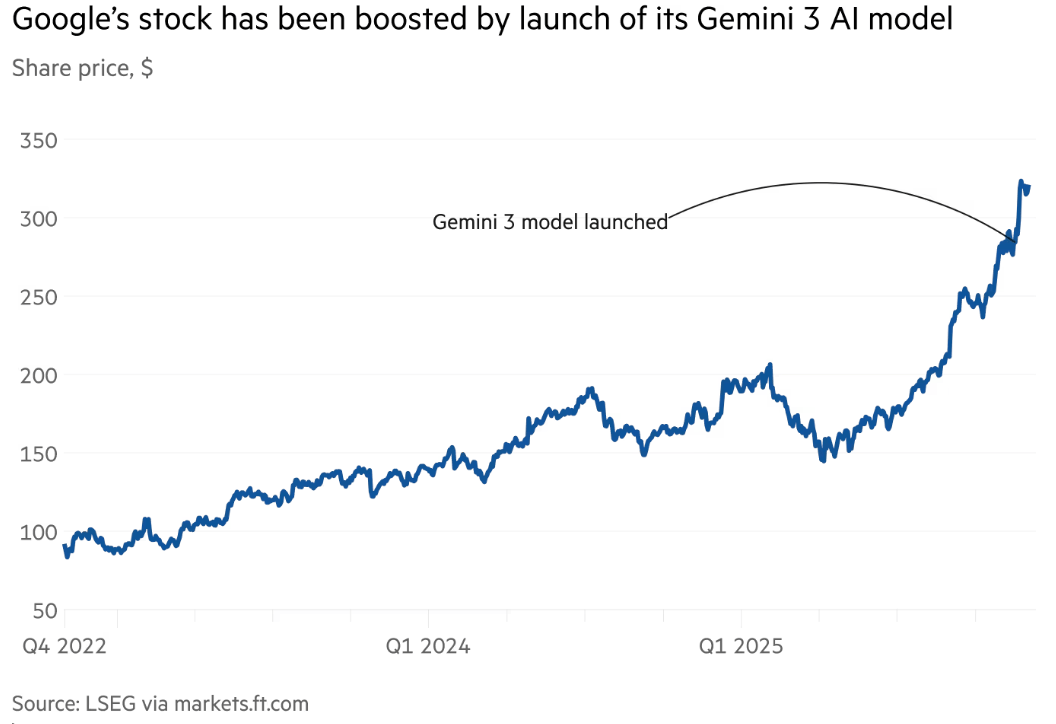
However, while the move may help OpenAI achieve success in its coming phases, some in the industry argue that the code red is nothing unusual. They see it as a normal response to competitive pressure, the kind of resource shift any company makes when product signals change.
Anthropic’s CEO even noted that these declarations tend to be overstated when a company already has a stable strategy.
Others are questioning how much substance sits behind the announcement. They worry that a high-profile memo can create more noise than progress if it is not backed by the slow, difficult engineering work needed to close gaps.
It was pointed out that getting the diagnosis right and staying committed to the work matter far more than the label attached to it.
There is also a broader debate over what the industry is really competing for. Some analysts argue that the real contest is not model versus model. It is about who can build the strongest platform with deep data loops through search, operating systems, browsers, and cloud ecosystems.
From that perspective, OpenAI’s decision to delay ads and agent features could hurt its ability to build those feedback loops over time.
OpenAI’s code red is ultimately a reminder of why competition matters in the first place. The market for AI is still in its early phases, and in this phase, it is unlikely for a company to have the upper hand for a long time.
The pressure OpenAI now faces from Google, Anthropic, and a fast-moving market has cracked the comfort it had established as the first to launch an AI model. However, now, it has been forced to return to the fundamentals that make a tool worth using every day.
Speed, reliability, trust, and thoughtful design are not the glamorous parts of innovation, yet they are what keep progress alive. Whether the code red becomes a turning point or a temporary adjustment will depend on what happens after the memo fades.
What is clear is that the age of a single dominant voice in AI is over. The next stage will be shaped by rivalry, by resilience, and by companies that remember that real power comes from earning users, not assuming them.

Quick Bits, No Fluff
Spotify gets hit with an AI knockoff band: King Gizzard fans find an AI clone filling the gap after the band quit the platform.
Trump greenlights Nvidia’s H200 to China: Commerce is poised to approve exports of powerful AI chips under new, highly scrutinized rules.
Americans want AI safety spending to increase: A JUST Capital survey shows the public and investors split on AI, but both back more investment in guardrails.
Dive into the 100 Greatest Business Books!
If you're a leader hungry for wisdom, a manager eager to sharpen your edge, or a tech enthusiast aiming to stand on the shoulders of giants, prepare to be enlightened.
We've curated an exhaustive database of the top 100 business books of all time, as voted by legends like Steve Jobs, Warren Buffet, Jeff Bezos, and more.
And guess what? We've seamlessly integrated it into a trackable Notion checklist.
Carve out moments in your schedule to tackle these masterpieces one by one, and soon you'll be strategising and executing like the pros.
*This is sponsored content
Brain Snack (for Builders)
 | Pick one surface of your product (not the whole thing): onboarding, chat latency, or refusal behavior. For the next week, pretend that’s your code red, ship one change that makes it faster, clearer, or less frustrating for a real user, then measure if they stick around longer or use it more. |
Wednesday Poll
🗳️ If you had to bet on one main edge for the next AI leader, what would you choose? |
Meme Of The Day
Rate This Edition
What did you think of today's email? |
