- Roko's Basilisk
- Posts
- Vibe Coding's Broken Promise
Vibe Coding's Broken Promise
Plus: Meta clones its CEO, Tesla adds streaks, and Trump's phone still MIA.

Roko's Basilisk
April 16, 2026
Here’s what’s on our plate today:
🧪 Vibe coding flooded the App Store, but the money didn't follow.
🗞️ Zuckerberg's digital twin, Tesla gamifies FSD, and the Trump phone saga.
📊 Thursday Poll: Where does vibe coding actually land?
🛠️ Three tools to start building with today.
Let’s dive in. No floaties needed…

Launch fast. Design beautifully. Build your company's website on Framer
Framer helps teams design, build, and launch their marketing sites lightning fast. With the ability to publish hundreds of CMS pages in a single click, operate at a global scale with seamless localization, and even host unified content across multiple domains, teams have never been able to ship faster. Trusted by companies like Miro, Bilt, and Perplexity.
*This is sponsored content
The Laboratory
TL;DR
The numbers are real: App Store submissions surged 84% year-over-year in Q1 2026, the largest wave since 2016, driven by AI coding tools that let anyone describe an app in plain English and have it built in minutes.
But revenue tells a different story: The top 10% of subscription apps now capture nearly 95% of all subscription revenue, a concentration that has widened even as the number of new apps has exploded.
Apple is caught in a bind: The company is simultaneously promoting AI-assisted development through Xcode and cracking down on third-party vibe coding apps that bypass its review process.
The real shift is beneath the surface: The most significant consequence of vibe coding may not be apps that compete in app stores at all, but personal, bespoke software tools that never enter the marketplace, a category of ‘software for one’ that rewires the relationship between users and the tools they rely on.
The developer’s role is changing, not vanishing: Karpathy himself retired the term ‘vibe coding’ after just 12 months, proposing ‘agentic engineering’ to describe a more disciplined practice where developers orchestrate AI agents rather than unquestioningly accepting their output.
How vibe coding split the app economy into two lanes
In 2008, Apple reshaped the smartphone industry with the launch of its App Store, turning the iPhone from a communication device into a platform for software. That shift triggered a wave of developer activity, as companies raced to build apps that would define the mobile experience.
For years, that model held steady: developers wrote code, and app stores distributed it. That began to change in early 2025, when Andrej Karpathy, a co-founder of OpenAI and former head of AI at Tesla, described a new approach to building software. Instead of writing code line by line, developers could describe what they wanted in plain English, let an AI model generate the code, and move forward without fully reading it. He called this ‘vibe coding,’ a shift that reframed software development from writing to directing.
Tools built around this new paradigm quickly translated theory into practice, as platforms like Cursor, Lovable, Bolt, and Replit turned AI-assisted development into usable products and, in the process, some of the fastest-growing businesses in tech. What had initially seemed like a shift in developer workflow began to reshape who could build software and how quickly it could be shipped, collapsing the gap between idea and execution. By early 2025, Y Combinator noted that a quarter of its startups were building codebases that were almost entirely AI-generated, not because founders lacked technical ability but because using AI had become the more efficient path. Within a year, even Andrej Karpathy had moved beyond the term ‘vibe coding,’ reframing the shift as ‘agentic engineering,’ where developers increasingly act as orchestrators of AI systems rather than writers of code.
Karpathy’s observation is not just cultural, and the clearest evidence that this shift has become structural began to emerge in early 2026.
The flood behind the numbers
According to Sensor Tower data reported by The Information, Apple’s App Store received 235.8k new app submissions in Q1 2026, an 84% year-over-year increase. The spike is a sharp reversal of a long decline, with submissions falling 48% between 2016 and 2024 before rebounding to nearly 600k in 2025, the highest annual total in almost a decade. The momentum has only accelerated into 2026, with monthly growth rates hitting 56% in December 2025 and 54.8% in January, the fastest pace in four years.
Sensor Tower analysts attribute this surge to the rise of agentic coding tools that have removed many of the barriers to building apps, a view echoed by The Information, which noted that, while the data does not isolate AI-generated apps, the speed of adoption suggests most new submissions are likely AI-assisted.
But the surge in supply is only half the story. To understand the full impact of vibe coding on the app economy, the demand side, measured in revenue, matters just as much.
Where the money actually goes
If the supply is expanding, the demand is concentrating.
According to Adapty’s State of In-App Subscriptions 2026 report, which analyzed 16k apps and over $3B in subscription revenue, the top 10% of apps now capture roughly 94.5% to 95% of total subscription revenue, a share that has widened even as hundreds of thousands of new apps have entered the market. Part of that shift is driven by monetization strategies, with weekly subscriptions now accounting for 55.5% of revenue, reflecting the low-commitment, fast-launch pricing models common among AI-built apps.
Quality offers a clearer explanation for why this gap persists. Analyses of AI-assisted code consistently show higher rates of issues and vulnerabilities, while audits of vibe-coded apps point to elevated churn, duplication, and weaker maintenance practices. In several cases, these weaknesses have translated into real-world risks, including apps with exposed user data and security breaches tied to code that was never deeply reviewed.
Taken together, these patterns suggest that while AI has made it dramatically easier to build and ship apps, it has not made it easier to sustain them. The result is a market where supply is abundant, but revenue continues to concentrate among a small set of apps with the infrastructure, reliability, and iteration cycles that current AI-driven workflows still struggle to match.
How the gatekeepers and builders are responding
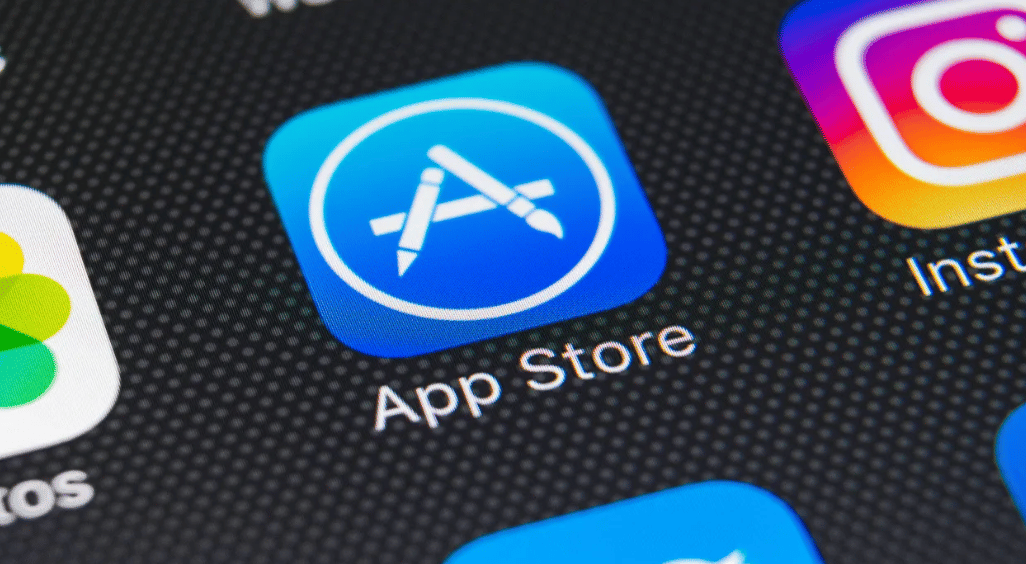
As AI reshapes how apps are built, it is also forcing platforms that control distribution to respond. Apple sits at the center of this tension, promoting AI-assisted development in Xcode through integrations with models like Claude and Codex, while simultaneously cracking down on apps that let users generate and execute code directly on devices. In March 2026, Apple removed a vibe-coding app and restricted updates to platforms like Replit, citing rules against dynamically executing code that bypasses App Store review.
The distinction is straightforward: AI tools are allowed when code is reviewed before distribution, but restricted when they enable real-time execution outside Apple’s control. Critics argue this is less about safety and more about preserving the App Store’s gatekeeping role, especially as users gain the ability to create their own software. Regulatory pressure, including Europe’s Digital Markets Act, is likely to intensify scrutiny of how that control is exercised.
In response, many AI-first platforms are shifting away from app stores altogether. Tools like Lovable and Bolt are moving toward web-based workflows, generating code that runs in browsers or on external hosting platforms rather than native apps. Meanwhile, established developers are not resisting the shift so much as adapting to it, integrating AI into existing workflows and taking on new roles focused on orchestration, refinement, and security, as building software becomes less about writing code and more about managing it.
Two futures from the same origin
The most significant impact of vibe coding may not show up in app store data at all. In early 2025, Kevin Roose described experimenting with software for one, small, highly personalized tools built for individual needs rather than mass markets. From hobby projects to personal dashboards, these apps were never meant for distribution, but they point to a deeper shift: people can now build software for themselves instead of searching for it.
This does not threaten dominant platforms, which rely on scale, data, and trust, but it does weaken the long tail of simpler apps where good enough is sufficient. The result is a market where more apps are created, but revenue continues to concentrate at the top, reinforcing patterns already visible in subscription data.
The bigger uncertainty is security. AI-generated code often carries vulnerabilities, and many of the people deploying it lack the expertise to catch them, raising the risk of failures as these tools move from experimentation to real-world use. Developers like Simon Willison and David Mytton have warned that more serious incidents are likely, especially as adoption scales.
What this adds up to is a transition already underway. As Andrej Karpathy reframed it, the shift from vibe coding to agentic engineering reflects a move from experimentation to structured development, even as the ecosystem continues to grow rapidly. The real question is not whether AI will change how software is built, but whether the systems around it, technical, regulatory, and economic, can keep pace with a world where software is increasingly created on demand, often by the people who use it.

Quick Bits, No Fluff
Zuckerberg's digital twin: Meta is building a photorealistic AI clone of Zuckerberg to give employee feedback, while simultaneously laying off 20% of the company.
Tesla gamifies self-driving: Tesla added Duolingo-style streaks to its FSD app to encourage drivers to use it more, part of Musk's push toward 10M active subscriptions by 2035.
The Trump phone, still not shipping: Trump Mobile relaunched its website with a new T1 design, still gold, still no release date, and quietly dropped the "made in America" promise.
2026 Salary Report: U.S. vs Global hiring.
Want to know what world-class talent actually costs in 2026?
Athyna's Salary Report breaks down real salary data across AI, Tech, Data, Design, and more—so you can see exactly where the savings are.
The numbers might surprise you.
*This is sponsored content
Thursday Poll
🗳️ Vibe coding: where does it actually land for you? |
3 Things Worth Trying
Lovable: Describe an app in plain English and watch it get built in minutes, no code required, and no App Store gatekeeping.
Cursor: The AI code editor that turned vibe coding into a professional workflow, now the go-to for developers who want speed without losing control.
Replit: Build, run, and ship apps from anywhere, browser included, even as Apple tries to slow it down.
The Toolkit
Dust: AI workspace that lets your team build secure copilots on top of internal docs, apps, and data.
Krea: Real-time AI canvas for generating and editing images or video from text prompts and sketches.
Lavender: AI sales email coach that scores your drafts, suggests edits, and improves reply rates.
Rate This Edition
What did you think of today's email? |
