- Roko's Basilisk
- Posts
- Why The Future Of AI Runs Quietly In The Background
Why The Future Of AI Runs Quietly In The Background
Devi Parikh, Co-founder & Co-CEO at Yutori.

Roko's Basilisk
January 17, 2026

Inside Yutori’s Bet on Always-On AI with Devi Parikh
Welcome to the first edition of Revenge of the Nerds. We’re skipping the hype and going straight to the builders. In this edition, we talked about:
After leading generative AI at Meta, Parikh left big tech to rethink how people use the web by building trustworthy AI agents that work proactively in the background—reliably handling real workflows (not just demos).
She believes this AI cycle is fundamentally different: even if progress stopped today, the technology would still reshape how work gets done.
Yutori’s focus on post-training, orchestration, and reliability across the stack is pushing AI from answers on demand toward autonomous progress without constant supervision.
Let’s dive in. No floaties needed.

Build faster with a Forward Deployed Engineer deployed directly into your team
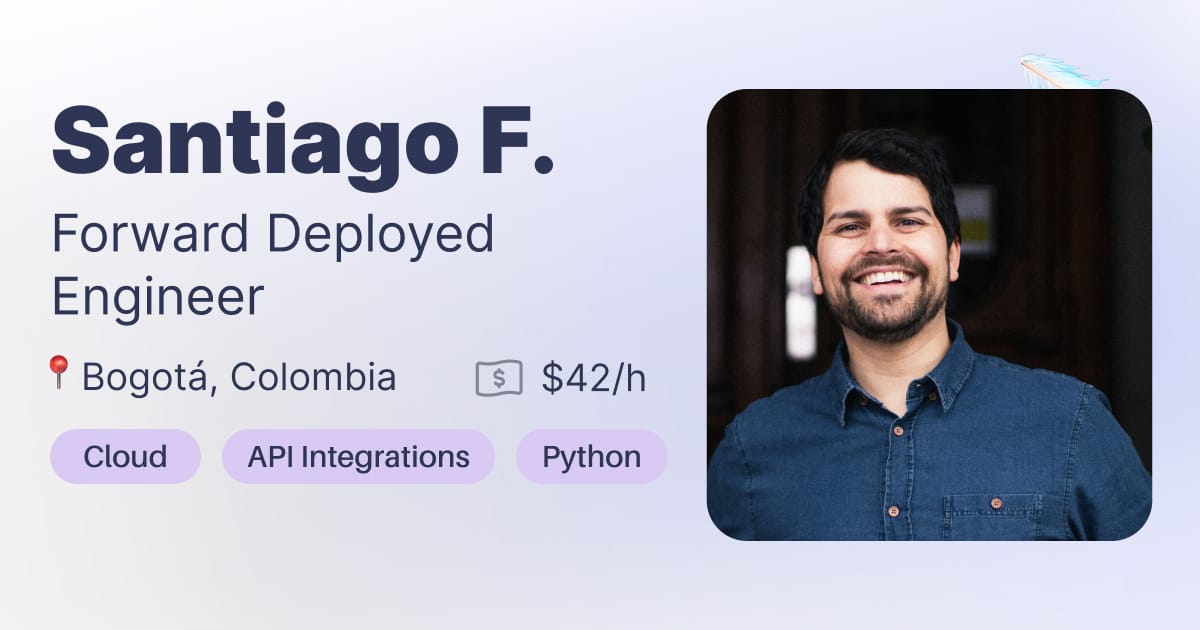
With Athyna, you get Forward Deployed Engineers who don’t just build software—they embed into your team, understand your business, and deploy solutions that work right now.
Here’s what you get:
Modern tech stack expertise—engineers experienced in Python, TypeScript, React, Node.js, AWS, Kubernetes, Terraform, and more.
AI-powered matching that identifies engineers aligned to your stack, product, and use case—no guesswork, no mismatches.
4-day turnaround—from brief to interviews, so you start shipping fast instead of waiting for hiring cycles.
Save up to $80k per year, per hire with top-tier global talent ready to deploy.
*This is sponsored content
Revenge of the Nerds:
Devi Parikh, Co-founder and Co-CEO at Yutori
Earlier, Parikh served as a senior director in generative AI at Meta and as an associate professor at Georgia Tech. Her academic work includes award-winning contributions to visual question answering and multimodal AI.
In 2025 she received the PAMI Mark Everingham Prize for her work on VQA. Outside research she has launched projects such as Humans of IA and AI Paygrades to bring transparency and human stories into the field of AI.

Why did you leave Meta to start Yutori, and why build now?
It was a combination of personal timing and where the technology was heading. At Meta, I was a Senior Director in Generative AI, leading multiple teams filled with amazing people doing great work. It was an exciting time, especially since Gen AI was one of the company’s top priorities. But as my role grew, I found myself getting further from the work happening on the ground. My days were increasingly filled with coordination, management, and alignment—which are important, but pulled me away from being in the weeds and directly driving the work. That realization made me start thinking seriously about doing something new.
At the same time, the idea of building web agents felt like it was right at the edge of what was possible. The technology wasn’t mature enough to deliver fully reliable products yet, but it was close. With our backgrounds in AI research and the kind of team we knew we could assemble, we felt we were in a sweet spot to push this forward. So it was both a personal and technological moment that aligned.
What is the one task you most want Yutori to handle flawlessly?
If I think about which digital task I find most annoying, taxes is the first thing that comes to mind. But that one might take a little while.
More broadly, though, what excites me is the idea that whenever I think of something I need to do, I can just jot it down or say it out loud, and these agents start working on it in the background. Maybe it’s something simple they can fully complete, or maybe it’s something ambiguous like planning a trip, where they start gathering information that they can surface when I check back in.
The idea that progress is happening quietly in the background while I’m living my life feels incredibly powerful. That’s the kind of effortless productivity we want Yutori to deliver—to give people more space to focus on whatever is meaningful to them.
What is the hardest part of making browser agents truly reliable?
There isn’t one magic solution; it’s a combination of many small, consistent efforts. We post train our own models in-house, which gives us more control and reliability for the specific use cases that show up in our product. Structurally, the system has layers of orchestration that manage access to APIs, MCP servers, our in-house web navigation model, etc. in a hierarchical way. Without that structure, the model would have access to too many tools at once, making its context blow up, and decision-making unreliable.
We’ve also built in a lot of persistence. Things can fail for all kinds of reasons, like browser timeouts, crashes, or ineffective tool use, so the system automatically retries, swaps browser providers, and explores different tool-use strategies. Each of these layers of resilience adds up, and together they make the agents significantly more reliable in real-world scenarios.
What is different about this AI cycle compared with past ones?
This cycle feels qualitatively different because the technology is already delivering real value. You can see it in how many people use tools like ChatGPT every day, all around the world. My dad in India uses it all the time, and to him, it feels like what he always wished Google was. He never liked how rigid search felt. You had to know exactly how to phrase things. With ChatGPT, the interaction is conversational and natural, which makes it far more accessible.

Even if foundation model development stopped today, these systems would still be useful in ways no previous technology has been. There are countless product experiences that haven’t even been built yet on top of these capabilities. That alone makes this wave feel very real and fundamentally different from what we’ve seen in AI before.
Why bet on post-training instead of pre-training, and how does it give Yutori an edge?
Pre-training is becoming more commoditized. There are already many strong base models available, both open and commercial, that anyone can build on. For what we’re doing, those models already have the fundamentals of the capabilities we need. The opportunity lies in amplifying and refining them for specific use cases, which is where post-training comes in.
By post-training our models in-house, we can make them more reliable for the workflows that matter to our users. It also makes our approach less capital intensive, since pre-training requires massive compute resources. On top of that, because we’re not relying on third-party APIs, our cost of serving the product is lower. This adds up quickly with a product like Scouts that's running web agents 24x7 for weeks and months on end. All of that together gives us a meaningful edge.
With many AI assistants launching, what makes Yutori fundamentally distinct?
What sets Yutori apart is its proactive nature. Our product, called Scouts, monitors the web for anything you care about. It can track when a product goes on sale, when concert tickets become available, or when flight prices drop. It can also follow things like new startup announcements, funding rounds, or industry updates. These are always-on agents running quietly in the background, sending you a notification only when something relevant happens.
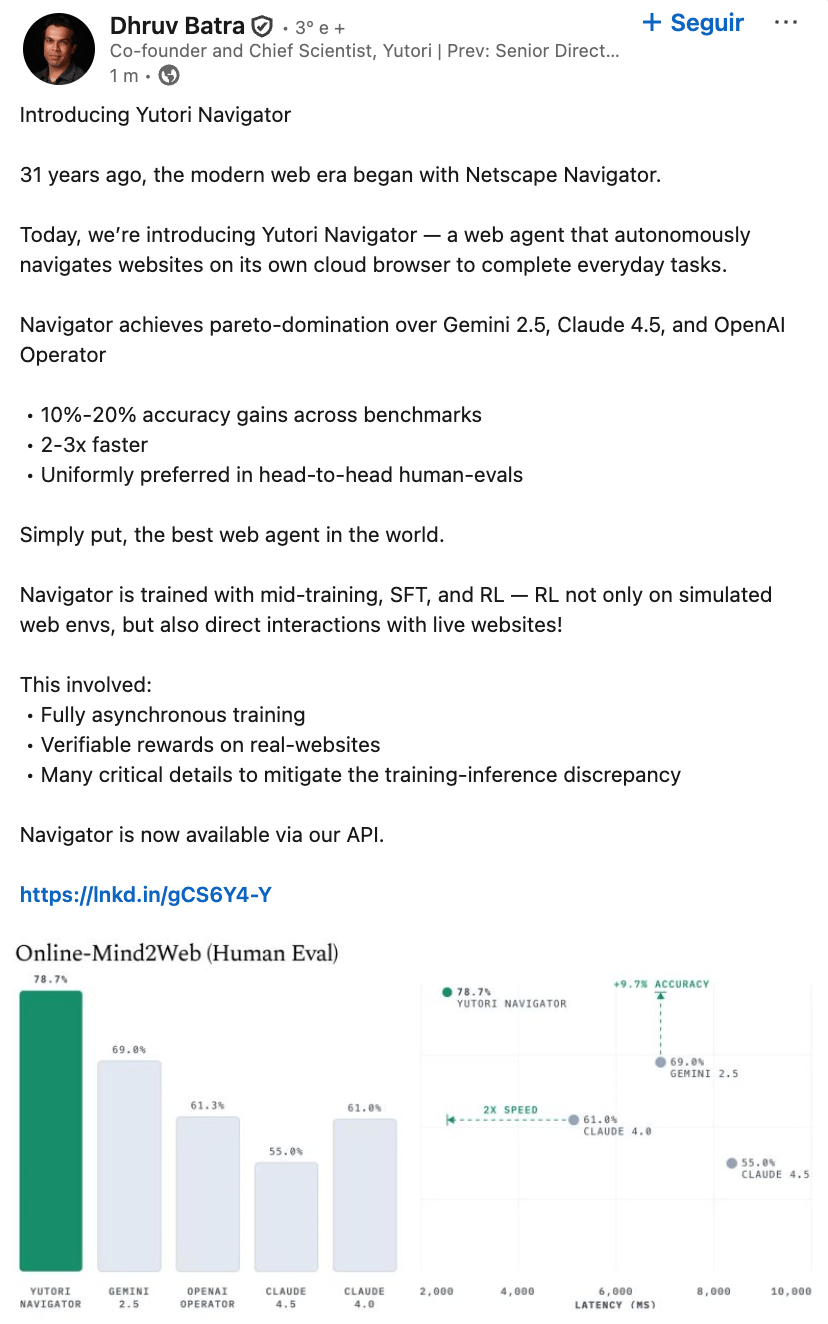
That proactive, background nature of our agents is a big part of what makes Yutori different. Contrast it to agents that run on your device, in your browser tab. They only work while your device is on, you can't scale them to dozens of multiple agents working on parallel. The other aspect is reliability, and innovating across the stack so that the modeling capabilities and product experiences we build around them are tightly coupled. Many web agents today are impressive tech demos, but few have turned into products people use every day. We focus on bridging that gap, building reliable, useful experiences that people actually depend on. It’s about creating something that works consistently, rather than overpromising and disappointing after the first try.
How do you want users to feel when using Yutori products each day?
I want people to feel calm, in the flow and less overwhelmed. Life today can feel like a constant stream of notifications, distractions, and context switching. Yutori is meant to create the opposite experience: a sense of mental spaciousness where you know that things are being handled for you.
Ideally, users feel they have more time and energy for what truly matters to them. They aren’t worried about missing something or trying to juggle a hundred small tasks. They can focus on what’s meaningful, knowing the rest is being quietly managed in the background.

After years in big tech, what still excites you about building AI?
What still excites me is the idea of machines doing intelligent things. That fascination hasn’t changed since I first started in this field. There’s something incredible about being able to talk to a machine, have it understand you, respond thoughtfully, and even take action on your behalf.
Every time I see that happen, when the system works smoothly and feels almost natural, it reminds me why I got into AI in the first place. The fact that we’re still discovering new ways to make that interaction more useful and more human keeps me deeply motivated.
Additional Reads:
Devi Parikh’s writings.
Creator of Humans of AI (Stories, Not Stats).
In the news (“Ex-Meta AI leaders debut an agent that scours the web for you”).


Bite-Sized Brains
Google yanks AI health blurbs (again): Google removed AI Overviews for some health searches after reports flagged false and potentially dangerous medical summaries.
Deepfake victims get a new legal weapon: The U.S. Senate passed the DEFIANCE Act to let targets of non-consensual sexual deepfakes sue creators for civil damages.
UK turns up the heat on Grok deepfakes: UK leaders say X is moving to comply with UK rules after Ofcom scrutiny tied to Grok-generated explicit deepfakes, with new sexual-deepfake criminalization taking effect this week.
Your next customer reads Memo.
200,000+ founders, operators, and investors start their day with Memorandum. They’re reading before their first meeting, budget call, or strategy session—so it’s the perfect moment to put your brand in front of them.
If your product helps companies move faster, think smarter, or grow stronger, Memo gets it seen by the people who can make that happen.
*This is sponsored content
Meme Of The Day

Saturday Poll
Would you actually trust an always-on AI agent (like Yutori’s Scouts) to run in the background and handle real web tasks for you? |
Rate This Edition
What did you think of today's email? |